What is the float stage in battery charging? It is the low, controlled charging phase that follows bulk and absorption charging. The charger supplies enough voltage to offset a battery’s natural self-discharge, while limiting unnecessary current. Think of a standby battery in a quiet equipment room: the charger keeps it ready, not rapidly filling it. That distinction matters. Too little voltage can leave a battery undercharged; too much may increase heat, water loss, or corrosion, depending on battery chemistry.
This guide examines five practical facts about float charging, with a focus on lead-acid batteries used in backup power and similar systems. IEEE Std 1188 provides maintenance guidance for valve-regulated lead-acid batteries, while IEC 60896-21 and IEC 60896-22 describe testing for stationary lead-acid batteries. These references underline an important point: float voltage is not one universal number. Battery design, temperature, charger settings, and manufacturer instructions all affect the correct value. A number copied from another installation may look convincing, yet still be wrong.
The details show up in real equipment. A warm battery cabinet, a persistent charging current, or swollen cases deserve attention—not guesswork. Float charging is often described as simple. In practice, it rewards careful measurement. The five facts ahead explain how the stage works, why settings matter, and what signs operators should watch. Some systems are less predictable than a chart suggests. That is worth remembering.
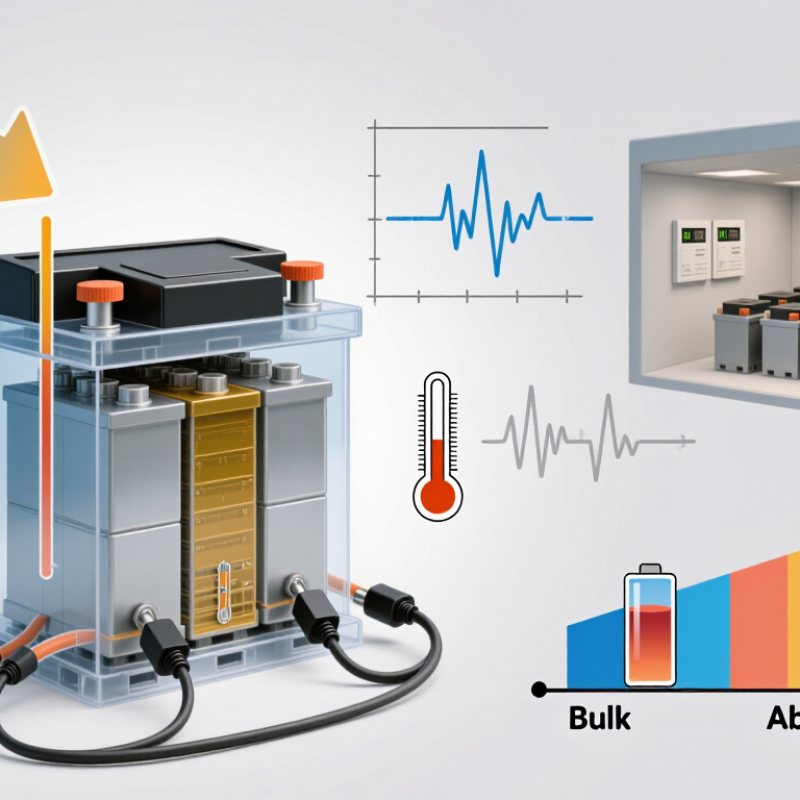
What Float Charging Means in Battery Maintenance
Float charging is the low-voltage maintenance stage used after a battery has reached full charge. It replaces the small amount of energy lost through self-discharge without pushing a strong charging current continuously. For many lead-acid batteries, this helps keep backup power ready between outages. Think of a battery resting on a charger in a utility closet: the charger supplies only what is needed to maintain its charge. It is not a fast-recharge setting. Small distinction, big impact.
Float voltage is not universal. It depends on battery chemistry, temperature, and the manufacturer’s specifications, so check the battery manual before setting a charger. Excessive voltage can generate heat and shorten battery life; on some flooded batteries, it can also increase water loss. A warm case or unusual odor deserves attention, not guesswork. Lithium batteries may require a different approach, and continuous float charging is not suitable for every model. Some chargers instead pause and recharge only when needed. That detail is easy to overlook. Float charging supports maintenance, but it cannot repair an aged battery or replace regular checks of connections and condition.
5 Best Facts About Float Stage in Battery Charging
What float charging means in battery maintenance
How to read the chart: These are representative float-voltage ranges per cell at 25°C. Actual settings vary by battery design; follow the battery manufacturer’s specifications.
- Float charging is a maintenance stage used after a lead-acid battery is fully charged.
- It uses a lower voltage than the bulk and absorption stages to offset self-discharge.
- The listed ranges are typical guidance, not universal settings.
- Float voltage generally needs temperature compensation; the correct value depends on the battery specification and temperature.
- Lithium-ion batteries are generally not held on a traditional float charge unless the battery manufacturer or battery-management system specifies it.
How a Charger Enters and Regulates Float Stage
A charger enters float stage after the battery has received most of its charge during bulk and absorption stages. In bulk, charging current is relatively high; during absorption, voltage is held steady while current gradually falls. Many lead-acid chargers switch to float when current drops below a set threshold or an absorption timer ends. The exact trigger varies by charger and battery.
That transition matters. In float, the charger lowers its voltage and supplies only enough current to offset the battery’s natural self-discharge and small connected loads. For a lead-acid battery, the correct float voltage depends on its design and temperature. A hot battery may need a lower setting; a cold one may need a higher setting. Check the battery maker’s specifications rather than relying on a generic number. Small voltage errors can add up over weeks.
Float is not a universal setting for every chemistry. Many lithium batteries do not need continuous float charging, and their battery management system may limit or stop charging. Not always. A practical check is to inspect the charger’s status and measure battery voltage after the charger settles, using a suitable meter. If readings drift, terminals feel warm, or the charger repeatedly restarts, investigate the settings and connections. There is a catch: one voltage reading cannot prove battery health, and temperature changes can complicate comparisons.
Why Float Voltage Must Match Battery Chemistry
During the float stage, a charger maintains a battery near full without pushing substantial current into it. The right voltage depends on battery chemistry. There is no universal setting. A voltage that suits one battery can slowly damage another.
Lead-acid batteries commonly use a specified float voltage, often adjusted for temperature. Check the battery maker’s datasheet: excessive voltage can cause gassing, water loss, and corrosion. For example, a warm battery in an enclosed cabinet may need a lower charging voltage than the same battery in a cool room. Small details matter.
Lithium batteries, including lithium iron phosphate, generally should not be held at the same float voltage used for lead-acid batteries. Many systems stop charging or use a lower maintenance voltage, as directed by the battery manufacturer. Too much time at high state of charge can increase cell stress. Not every charger handles this well. A common shortcut is choosing a setting because it worked on an older battery; that is convenient, but not dependable. Match the charger profile to the exact chemistry, confirm the recommended voltage, and check temperature limits before leaving equipment connected.
5 Best Facts About Float Stage in Battery Charging - Why Float Voltage Must Match Battery Chemistry
Note: Voltage ranges are typical reference values, not universal settings. Always use the battery manufacturer’s specified charging profile, temperature limits, and voltage limits.
When Batteries Benefit from Float Charging
Float charging helps batteries that spend most of their time waiting, not working. Think of a standby battery in a fire alarm panel or emergency lighting system: it must remain ready after weeks of little use. The U.S. Department of Energy’s Primer on Lead-Acid Storage Batteries (DOE-HDBK-1084-95) describes float charging as maintaining a battery’s charge with a continuous, controlled voltage. For lead-acid batteries, common float settings are roughly 2.20–2.30 volts per cell, but the correct value depends on battery design and temperature. Small differences matter.
This approach suits backup systems with occasional discharge and enough time to recharge between events. IEEE Std 1188-2014 emphasizes following the battery manufacturer’s charging limits and monitoring battery condition during service. A practical check includes measuring terminal voltage, inspecting connections, and looking for unusual warmth or swelling. Keep the room temperature in mind, too. Heat can accelerate battery aging, while a fixed charging voltage may be unsuitable across changing temperatures. Float charging is not a universal trick: lithium-based batteries generally require chemistry-specific controls, and frequently cycled batteries need a charging strategy matched to their workload. The awkward part is that a battery can show normal voltage and still have reduced capacity. A periodic capacity test may reveal what a quick meter reading cannot.
Risks of Incorrect Float Voltage and Temperature Control
5 Best Facts About Float Stage in Battery Charging
Float charging keeps a fully charged battery ready without continuous rapid charging. But the setting is not harmless. For lead-acid batteries, excessive float voltage can accelerate grid corrosion, water loss, and heat buildup. In sealed VRLA batteries, excess heat can contribute to thermal runaway. Too little voltage can leave the battery undercharged, encouraging sulfation and reducing available capacity. Small errors can accumulate.
Temperature changes the risk. IEEE’s Recommended Practice 1188-2005 includes temperature monitoring in VRLA battery maintenance. Industry guidance commonly estimates that service life may fall by about 50% for each 8–10°C rise above 25°C. That is a practical rule, not a guarantee for every battery. A warm equipment room, blocked ventilation, or a faulty temperature sensor can quietly push a battery beyond its intended conditions. Check the battery maker’s specified float voltage and temperature-compensation settings; one coefficient should not be assumed for every design.
A useful inspection pairs voltage readings with temperature records. Look for uneven cell temperatures, swollen cases, or persistent warmth near the battery rack. These signs need investigation. A voltage reading alone can look normal while temperature control is failing. It is easy to overlook sensor placement, and that is worth revisiting. Keep measurement dates and ambient conditions together, so a gradual drift is easier to spot.
Conclusion
What is the float stage in battery charging? It is the maintenance phase that follows the main charging stages, when a charger supplies a small, controlled amount of power to keep a fully charged battery ready for use. The charger typically enters float mode after detecting that the battery has reached its target charge. It then regulates the output to offset natural self-discharge without continuing to charge at a higher rate.
The correct float voltage depends on the battery’s chemistry, so settings suitable for one type may be unsuitable for another. Float charging can benefit batteries that remain connected to a charger for long periods, such as backup or standby systems. However, an incorrect voltage or poor temperature compensation can cause undercharging, excess heat, or gradual battery damage. Choosing chemistry-appropriate settings and following the battery’s operating guidance helps maintain charge while reducing these risks.

 Hyper Charger