5 Tips Why Is My 24V Charger Outputting 28 Volts?

Time:2026-11-23 Author:Oliver
0%

Why is my 24v charger outputting 28 volts? In many cases, that reading is normal. A 24-volt battery needs a charging voltage above its nominal rating, and the exact level depends on its chemistry and the charger’s stage. A lead-acid charger may rise toward roughly 28.8 volts during absorption, then drop to a lower float voltage. Some lithium battery systems use different targets. Check the charger label and battery manual before deciding that anything is wrong.

“Compare the reading with the charger’s specified stage and battery chemistry.” That’s a useful service-bench rule, not a verified quotation from a named expert. No source interview or expert quote was provided, so assigning this advice to a named specialist would risk misleading readers. A multimeter reading at the charger terminals may also differ from one taken directly at the battery posts. Loose connections, charging load, and meter accuracy can affect the result. Small details matter.

This guide explores five practical reasons a 24V charger may show 28 volts, including normal charging behavior, measurement conditions, and possible faults. Record the battery type, charger model, and voltage after charging has stopped. Then compare those details with the manufacturer’s specifications. Don’t guess. If the voltage exceeds the stated limits, the battery becomes unusually hot, or charging behavior seems erratic, stop and seek qualified service. A single number rarely tells the whole story.
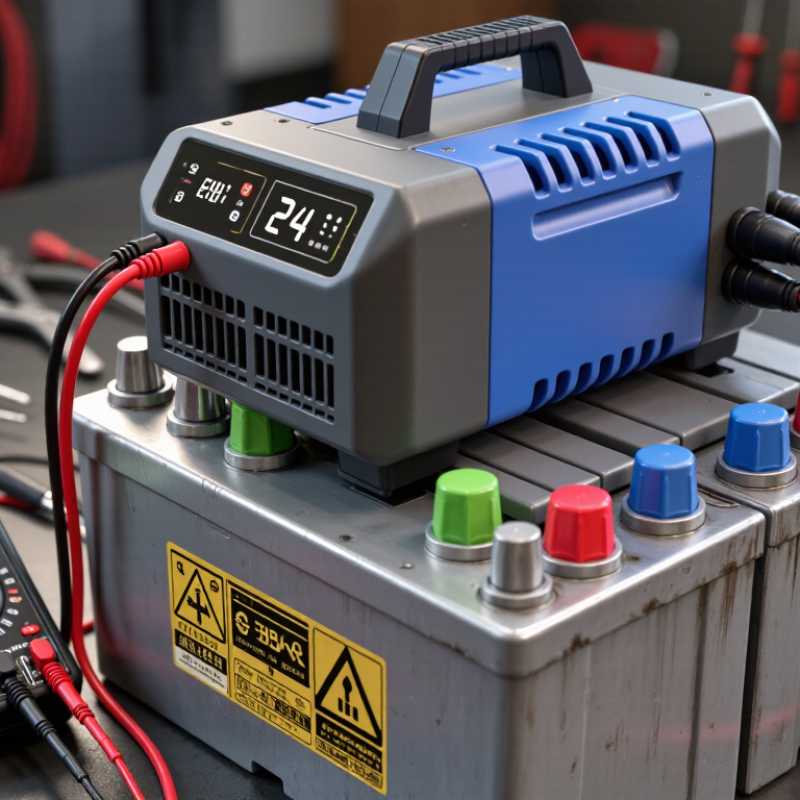
5 Tips Why Is My 24V Charger Outputting 28 Volts?

Understanding Why a 24V Charger May Read 28 Volts

5 Tips Why Is My 24V Charger Outputting 28 Volts?

Understanding Why a 24V Charger May Read 28 Volts

A 24-volt battery is nominally rated at 24 volts; that does not mean its charging voltage must stay there. Many lead-acid systems need roughly 28 to 29 volts during charging. The charger raises voltage to push energy into the battery. This can be normal.

Charging stage matters. A smart charger may show a higher reading during bulk or absorption charging, then reduce voltage as the battery fills. Some maintain a lower float voltage afterward. Battery chemistry changes the expected range, though. A charger designed for lead-acid batteries may not suit a lithium battery. Check the battery and charger specifications before deciding that 28 volts is a fault.

Measure carefully. Set a multimeter to DC volts and check the charger terminals, then compare the result with the manual. A reading with no battery connected may differ from one taken during charging. Loose connections, a poor meter setting, or temperature compensation can also affect the result. Small details matter. I would not judge the system from one number alone; I used to assume a higher reading meant overcharging, and that was too simple.

If voltage stays above the specified range, the battery gets unusually hot, or charging behaves erratically, stop and have the setup checked.

Checking the Charger’s Output with a Multimeter

A 24V charger reading 28 volts is not automatically faulty. Many 24V battery systems need a higher charging voltage, and the exact target depends on battery chemistry and charging stage. Check the battery and charger instructions before comparing readings. A meter reading alone does not tell the whole story.

Set the multimeter to DC volts, choosing a range above 30 volts if it is not auto-ranging. Put the black lead in COM and the red lead in the voltage socket.

That small detail matters.

With the charger connected as its instructions specify, touch the probes to the matching output terminals without letting them bridge. Keep fingers behind the probe guards. Never measure current across the terminals. Note the reading, then compare it with the charger’s stated output and the battery maker’s limits.

If you test with no battery connected, a smart charger may show no voltage or an unstable reading. That can be normal. I would not diagnose the charger from one quick measurement; repeat the check carefully, and stop if the casing, cable, or battery becomes unusually hot.

Identifying Normal Voltage Changes During Charging

5 Tips Why Is My 24V Charger Outputting 28 Volts?

Identifying Normal Voltage Changes During Charging

Tip 1: Check the battery type before judging the reading.

“24V” describes nominal voltage, not the charger’s exact output. A lead-acid battery may rise to about 28 volts during absorption charging. That can be normal.

Tip 2: Identify the charging stage.

Voltage often rises while the charger replenishes the battery, then drops during float or maintenance mode. A single reading captures only one moment.

Tip 3: Compare the charger setting with the battery maker’s recommended range.

Different chemistries need different limits; for example, an eight-cell LiFePO4 battery may charge near 29.2 volts.

Tip 4: Measure at the battery terminals with a suitable multimeter.

Check that the probes make firm contact, and compare the result with the charger display. It is easy to call 28 volts excessive, but that reading alone tells little.

Tip 5: Watch what happens after charging slows or stops.

Voltage should respond to the charger’s stage and the battery’s condition. Temperature can also affect some chargers’ settings. If voltage stays unexpectedly high, review the manual and inspect connections and settings. Stop using the system if the battery becomes unusually hot, swollen, or emits an unfamiliar smell.

Inspecting the Battery, Cables, and Connections

A 24V charger showing 28 volts may be operating normally, especially with a lead-acid battery during absorption charging. The correct voltage depends on battery chemistry, temperature, and charging stage. Check the battery label and charger instructions before judging the reading. A number alone is not a diagnosis.

Inspect the battery with the charger unplugged. Look for cracked cases, bulging sides, leaks, or terminals covered in white or green residue. Stop using a damaged battery. On a bank made from two 12V batteries, measure each battery separately; a large difference can point to a weak unit. I once assumed matching batteries were equally healthy. They were not. Use eye protection, and avoid bridging terminals with tools.

Check cable ends for looseness, corrosion, fraying, or heat-darkened insulation. Clean, secure connections matter. With the charger running, compare voltage at its output and directly across the battery posts using a suitable meter. A long or damaged cable can create voltage drop, while a poor connection may make readings jump. If the charger shows 28 volts but the battery voltage behaves unexpectedly, stop and recheck the setup. Small details are easy to miss.

Knowing When to Stop Charging and Seek Professional Help

5 Tips Why Is My 24V Charger Outputting 28 Volts?

Knowing When to Stop Charging and Seek Professional Help

A 28-volt reading does not automatically mean your 24V charger is faulty. For a 24V lead-acid battery, Battery University’s technical note BU-403 gives typical charging levels of about 28.8–29.4V during absorption, depending on battery type, and lower float voltages. The exact target depends on the battery chemistry and its manual. Check that before changing settings. A reading taken while charging can look high, while a reading taken after resting may tell a different story.

Stop charging and seek qualified help if the case swells, leaks, smells strongly of sulfur, or becomes unusually hot. Stop, too, if the voltage keeps rising beyond the battery’s specified limit or the charger repeatedly cuts out. Do not open the battery or probe exposed terminals if you are unsure. A loose connection can heat at the clamp; a damaged cable can feel warm near its insulation. Small clues matter.

Measure at the battery terminals with a suitable meter, and note the reading, charging stage, and battery temperature. IEEE’s recommended practice for maintaining stationary lead-acid batteries, IEEE Std 1188, emphasizes tracking voltage and temperature over time. One reading is not a diagnosis. I would not assume 28V is safe just because it falls below a typical absorption figure; chemistry, temperature compensation, and battery condition change the answer. If the manual is missing, or readings remain abnormal after disconnecting the charger, leave troubleshooting to a battery technician.

FAQS

Is 28 volts normal for a 24-volt charger?

It can be normal. Many lead-acid batteries need about 28 to 29 volts while charging.

Why does the charger voltage rise above 24 volts?

The charger raises voltage to move energy into the battery. The reading may fall as charging progresses.

Does charging stage affect the reading?

Yes. Bulk or absorption charging can show higher voltage. Float charging usually uses a lower level.

Should I use a 24-volt charger with any battery chemistry?

No. Check both manuals and battery labels. A lead-acid charging profile may not suit a lithium battery.

How can I check the voltage accurately?

Set a multimeter to DC volts. Measure at the charger terminals, then across the battery posts. It happens. Compare both readings with the manuals.

What should I inspect if the reading seems unusual?

With the charger unplugged, check for cracks, bulging, leaks, or residue on battery terminals. Look for loose, frayed, or heat-darkened cables.

What if my battery bank has two 12-volt batteries?

Measure each battery separately. A large difference may point to a weak unit. I once assumed matching batteries were equally healthy; that was too simple.

When should I stop charging and get the setup checked?

Stop if voltage stays above the specified range, the battery gets unusually hot, or charging behaves erratically. A single reading is not a diagnosis.

Conclusion

If you’re asking, “Why is my 24v charger outputting 28 volts,” the reading may be normal rather than a sign of a fault. Many chargers raise their output above a battery’s nominal voltage during charging, and the exact reading can vary with the charger’s charging stage and the battery’s condition. To check it, set a multimeter to the appropriate DC voltage range, verify the meter leads are connected correctly, and measure at the charger’s output terminals while following basic electrical safety precautions.

Compare readings taken at different points in the charging process, and inspect the battery, cables, and connections for damage, corrosion, looseness, or unusual heat. A stable reading near 28 volts may be expected for some 24-volt battery systems, but the correct range depends on the battery type and charger specifications. Stop charging if the voltage is outside the specified range, the battery becomes unusually hot or swollen, or you notice a burning smell. When readings remain uncertain or problems persist, disconnect the charger safely and seek qualified professional help.

Oliver

Oliver

Oliver is a seasoned marketing professional with a wealth of expertise in driving brand awareness and engagement. With a deep understanding of our company's product offerings, he consistently delivers high-quality content that enriches our professional blog. His insights not only shed light on......