How to Find the Best Charging Current for a 100Ah Battery?

Time:2026-10-10 Author:Isabella
0%

Choosing a charging current for a 100Ah battery is not a simple arithmetic exercise. Battery chemistry, age, temperature, charger quality, and manufacturer limits all matter. A current that safely charges lead-acid batteries may stress a lithium battery, or waste valuable charging time.

So, what is the best charging current for a 100Ah battery? For many deep-cycle lead-acid batteries, a practical starting range is 10A to 20A. Trojan Battery’s technical guidance commonly places charging current near 10% to 13% of rated capacity. Battery University also explains that slower charging can reduce heat and support longer service life. These figures are useful, but they are not universal rules.

Lithium iron phosphate batteries often accept higher currents. Many LiFePO4 manufacturers specify 0.5C charging, equal to 50A for a 100Ah battery. However, the battery management system, charger, cables, and temperature limits must support that rate. Victron Energy’s lithium battery documentation stresses following manufacturer charging profiles and low-temperature protections. The label matters more than internet shortcuts.

A neat formula can mislead. I have seen chargers selected by capacity alone, while ventilation, cable size, and battery temperature were ignored. That approach needs reconsideration. This guide compares charging currents by chemistry and operating conditions. It also explains realistic charge times, safety margins, and signs of excessive current. Always verify the battery datasheet before connecting a charger. A calm, controlled charge is usually better than the fastest possible one.
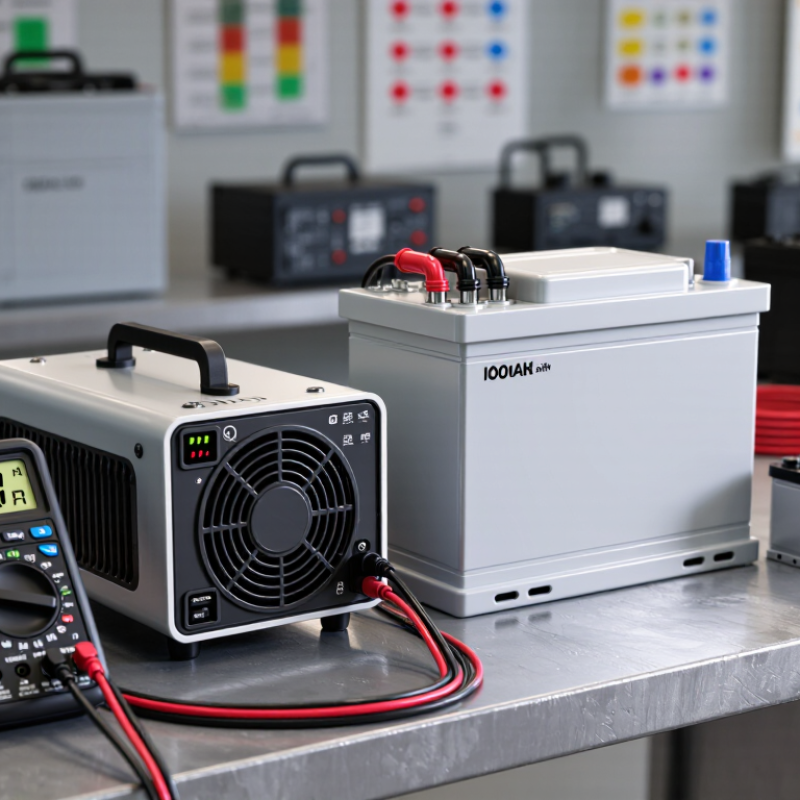
How to Find the Best Charging Current for a 100Ah Battery?

Understanding the Relationship Between Battery Capacity and Charging Current

How to Find the Best Charging Current for a 100Ah Battery?

Understanding the Relationship Between Battery Capacity and Charging Current

A 100Ah rating describes storage capacity, not the correct charging current. It does not mean the battery should receive 100 amps. Charging current depends on battery chemistry, construction, temperature, and the manufacturer’s limits. A lead-acid battery commonly charges near 10–20 amps, or roughly 0.1C–0.2C. Some lithium batteries accept higher rates, but their battery management system and specifications must control the decision.

Capacity and current are closely connected. A 10-amp charger may theoretically refill a 100Ah battery in ten hours. Real charging takes longer because charging losses, temperature changes, and the final absorption stage reduce efficiency. A partially discharged battery also needs less energy than a completely empty one. Small details matter.

Check the data sheet first. Always.

Measure the battery temperature during charging, especially in a warm garage or enclosed compartment. Excessive heat, swelling, unusual smells, or voltage instability require immediate attention. I have found simple calculations useful, but they can create false confidence. A charger that looks suitable on paper may still be unsuitable for an aging battery, damaged cells, or poor ventilation.

For practical sizing, choose a current that fits the battery’s recommended C-rate. If the specification permits 0.2C, a 100Ah battery may accept 20 amps. Use a lower current when longevity matters more than charging speed. A slower charge is not automatically better, either; the correct range matters most. Check the charge voltage, temperature limits, and termination method together.

How to Find the Best Charging Current for a 100Ah Battery? - Understanding the Relationship Between Battery Capacity and Charging Current

Battery Chemistry Typical Recommended Charge Rate Charging Current for 100Ah Approximate Bulk Charging Time Charging Characteristics Practical Recommendation
Flooded Lead-Acid 0.10C–0.20C 10–20A Approximately 6–12 hours Uses bulk, absorption, and float stages. Charging slows considerably near full capacity. A 10A–15A charger is a conservative choice for regular charging.
AGM Lead-Acid 0.10C–0.20C 10–20A Approximately 5–10 hours Requires controlled voltage limits and an absorption stage; excessive current can increase heat and shorten service life. Use about 10A for gentle charging or up to 20A when the battery specifications allow it.
Gel Lead-Acid 0.05C–0.15C 5–15A Approximately 8–14 hours Sensitive to overvoltage and excessive current, which may cause gas generation and permanent damage. Prefer a charger near 10A unless the battery manufacturer specifies otherwise.
LiFePO4 0.20C–0.50C 20–50A Approximately 2.5–6 hours Usually charged with constant-current followed by constant-voltage control. A compatible battery-management system is required. A 20A–30A charger offers a good balance between charging speed, heat, and battery life.
Other Lithium-Ion Chemistries Commonly 0.20C–0.50C 20–50A Approximately 2.5–6 hours The allowable current, voltage, temperature range, and battery-management settings vary by cell design. Follow the exact current and voltage limits specified for the battery pack.
Calculation Item Formula or Example Meaning
C-rate Charging current ÷ battery capacity For a 100Ah battery, 10A equals 0.10C and 30A equals 0.30C.
Ideal charging time 100Ah ÷ charging current A 20A charger requires about 5 hours under ideal conditions.
Real-world charging time Usually longer than the ideal calculation Energy losses, temperature, battery age, state of charge, and absorption or balancing stages extend the total time.
Best general choice 10–15A for lead-acid; 20–30A for LiFePO4 These ranges are common practical starting points, but the battery's specified limits always take priority.

Note: The values are general engineering guidelines for a nominal 100Ah battery. Always use a charger with the correct charging voltage, chemistry profile, temperature protections, and current limit for the specific battery.

Identifying the Battery Chemistry and Its Recommended Charging Limits

A 100Ah rating does not reveal the correct charging current. Battery chemistry determines that limit. A lead-acid battery commonly accepts 0.1C to 0.2C, equal to 10–20A. Gel batteries often require gentler charging. Excessive current can cause heat, gassing, or permanent plate damage.

Lithium batteries behave differently. A 100Ah lithium iron phosphate battery may commonly charge at 0.5C, or 50A, when its manufacturer permits it. Some designs allow higher rates, but the battery management system remains decisive. Never treat 50A as automatically safe. It may not be.

IEC 61960-3:2017 uses controlled current conditions for rechargeable lithium battery capacity testing. This shows that ampere-hours alone cannot define a field charging limit. IEC 62620:2014 also evaluates industrial lithium cells under specified test conditions, rather than one universal charging rate. The U.S. Department of Energy’s 2023 National Blueprint for Lithium Batteries emphasizes chemistry-specific controls, thermal management, and protection circuitry.

In practical servicing, I check the label, datasheet, charger profile, and ambient temperature together. A 10A charger seems conservative, but it can still be unsuitable for a lithium battery with a different voltage profile. Cold conditions deserve caution. Charging lithium cells below freezing can cause metallic lithium deposition. That risk is easy to overlook. Even experienced users sometimes rely too heavily on the 100Ah number.

Calculating a Safe Charging Current for a 100Ah Battery

Choosing a safe charging current for a 100Ah battery starts with its chemistry and manufacturer guidance. Capacity alone does not set the correct limit. A lead-acid battery often charges near 0.1C, which equals 10A for a 100Ah unit. Some sealed batteries permit higher currents, but their data sheets must decide.

Lithium batteries commonly accept faster charging. A 0.5C rate equals 50A for the same capacity. However, the battery management system, cell temperature, and charger voltage still matter. In practice, I would select a charger below the stated maximum when daily charging is not urgent. Slower charging usually produces less heat.

Check the battery while charging. Warm cables, swelling, unusual odor, or rapid voltage changes require immediate attention. Use cables rated for the selected current, and place lead-acid batteries in a ventilated area. Charging current can also fall near full capacity, so a 10A charger may not deliver 10A continuously. A simple calculation helps, but it can mislead without real measurements. Temperature compensation and an inaccurate capacity label may change the result. My cautious starting point would be 10A for many 100Ah lead-acid batteries, then adjustment only after reviewing the technical specifications and charging behavior.

Adjusting Charging Current for Temperature, Age, and Battery Condition

How to Find the Best Charging Current for a 100Ah Battery?

A 100Ah rating does not automatically define one correct charging current. The battery chemistry, charger design, and manufacturer’s limits matter more. For many lead-acid batteries, 10A is a cautious starting point. That equals 0.1C. Some lithium batteries accept 20A or more, but their battery management system must support it. The simple 10A rule is useful, but incomplete. Check the battery label and technical sheet before connecting a charger.

Temperature changes the safe charging range. In cold conditions, lead-acid batteries may need temperature-compensated charging voltage. Lithium batteries should not be charged below freezing unless the system specifically permits it. In hot weather, reduce the current when possible and improve airflow. A battery case that feels unusually hot needs attention. Stop charging if you notice swelling, leaking, cracking, or a sharp chemical smell.

Age and condition also change the decision. An older battery often develops higher internal resistance, causing more heat and slower voltage recovery. Begin with a lower current, such as 5A, and monitor voltage, temperature, and charging time. A healthy 100Ah battery should charge steadily, not jump rapidly to full voltage. I would not rely on one test alone; surface voltage can look normal while capacity has already fallen. Record the readings after several cycles. Small changes often reveal more than a single impressive measurement.

Checking Charging Progress and Preventing Overcharging Damage

How to Find the Best Charging Current for a 100Ah Battery?

For a 100Ah battery, charging current should match its chemistry, age, and manufacturer limits. A common lead-acid starting point is 10–20A, or roughly 0.1–0.2C. Lithium batteries may accept higher currents, but their battery management systems still set strict limits. The U.S. Department of Energy’s Energy Storage Grand Challenge Roadmap identifies monitoring, thermal control, and protection systems as key safety functions. Current alone is not enough.

Watch the charging pattern, not only the charger display. During bulk charging, current usually stays high. It should fall as voltage approaches the programmed absorption level. A warm case, swelling, sharp odor, or unusual voltage rise needs immediate attention. Stop charging if these signs appear. For lead-acid batteries, check resting voltage after several hours without a load. For lithium batteries, review the battery monitor and protection alerts. The International Energy Agency reports that battery management and thermal monitoring are central to safer energy-storage operation in its Global EV Outlook 2024.

Do not keep a full battery at maximum voltage unnecessarily. That habit can shorten service life. I once trusted an “automatic” charger too quickly; the current looked normal, but the temperature kept climbing. That was a useful warning. Measure temperature, voltage, and current together. Recheck them after cable changes, cold weather, or battery aging. A conservative setting is often safer than chasing the fastest charge.

How to Find the Best Charging Current for a 100Ah Battery?

Reference profile for a 12V, 100Ah lead-acid battery starting at approximately 50% state of charge. A conservative charging current is about 10A, equal to 0.1C. The current should gradually taper during the absorption stage to reduce overcharging risk.

How to read the chart: The battery accepts a steady 10A during the bulk stage. As the voltage approaches approximately 14.4V, the charger enters absorption mode and the current decreases. Once the battery reaches about 100% state of charge, a lower float voltage near 13.6V helps maintain the battery without continuous high-current charging. Actual limits vary by battery chemistry and manufacturer specifications.

FAQS

Does a 100Ah rating determine the correct charging current?

No. Battery chemistry, age, temperature, and manufacturer limits determine the suitable current. Capacity alone is not enough.

What charging current commonly suits a 100Ah lead-acid battery?

A typical starting range is 10–20A, or about 0.1C to 0.2C. Older batteries may need gentler charging.

Do gel batteries accept the same current as standard lead-acid batteries?

Not always. Gel batteries often require lower charging current and a suitable charging profile. Excessive current can create heat or permanent damage.

Can a 100Ah lithium battery safely charge at 50A?

Sometimes, but not automatically. A 50A rate equals 0.5C and requires approval from the battery specifications and protection system.

Is a 10A charger safe for every 100Ah battery?

No. A low current can still use the wrong voltage profile. Check the label, datasheet, charger settings, and battery temperature together.

How can I recognize charging problems during the process?

Watch current, voltage, and temperature together. Swelling, a hot case, sharp odor, or sudden voltage rise requires stopping immediately.

What should happen to charging current near full capacity?

Current usually remains high during bulk charging. It should gradually fall as voltage approaches the programmed absorption level.

Why is cold weather especially important for lithium batteries?

Charging lithium cells below freezing can cause metallic lithium deposition. That damage may develop quietly, even when the charger display looks normal.

How should I check whether a battery is fully charged?

For lead-acid batteries, measure resting voltage after several hours without a load. For lithium batteries, check the monitor and protection alerts.

Is keeping a full battery at maximum voltage harmless?

No. Holding maximum voltage unnecessarily can shorten service life. I once trusted an automatic charger too quickly; the rising temperature proved my mistake.

Conclusion

What is the best charging current for a 100Ah battery depends mainly on its chemistry, design, and condition. As a general starting point, a charging current around 10–20A is often suitable for many batteries, but the manufacturer’s recommended limit should always take priority. Lead-acid batteries may require a slower, more controlled charge, while lithium-based batteries can often accept higher currents if their protection system supports them. The battery’s capacity provides a useful reference, but it does not determine the safe current by itself.

Temperature, age, and overall battery condition should also influence the charging setting. Reduce the current in very hot or cold conditions and use a gentler charge for an older or weakened battery. During charging, monitor voltage, temperature, and progress, and stop or reduce the charge when the battery reaches its specified full-charge level. Using the correct charger and avoiding prolonged overcharging helps prevent heat buildup, capacity loss, and permanent damage.

Isabella

Isabella

Isabella is a dedicated marketing professional with a sharp focus on driving brand growth and engagement through strategic content creation. With an extensive background in digital marketing, she combines her passion for storytelling with her keen understanding of industry trends to deliver......