A battery that has sat unused for a year may look quiet, dusty, and completely dead. Yet its condition depends on the battery type, storage temperature, charge level, and internal damage. The question, “Can a dead battery be recharged after sitting for a year,” has no universal answer. A lightly discharged battery might recover slowly. A deeply sulfated lead-acid battery may not. Lithium batteries require different checks and charging equipment.
Experienced technicians do not connect a charger immediately. They inspect the case for swelling, cracks, leaks, corrosion, or a sharp chemical smell. Those warning signs mean the battery should not be charged. A digital multimeter can reveal whether measurable voltage remains, but voltage alone cannot confirm usable capacity. That is an important limitation.
These seven tips explain how to assess the battery carefully, choose a compatible charger, and avoid unsafe shortcuts. They also distinguish temporary recovery from reliable performance. A battery may show normal voltage after charging but fail when powering headlights or starting an engine. That difference matters.
Small details help. Record the battery’s age, measure its resting voltage, and charge it in a ventilated area. Stop if it becomes hot, swollen, or noisy. Do not leave an unattended charger connected overnight. Manufacturer instructions and guidance from a qualified battery professional should take priority, especially with high-capacity or lithium models. The process is not always successful. Sometimes replacement is the safer, more practical choice.
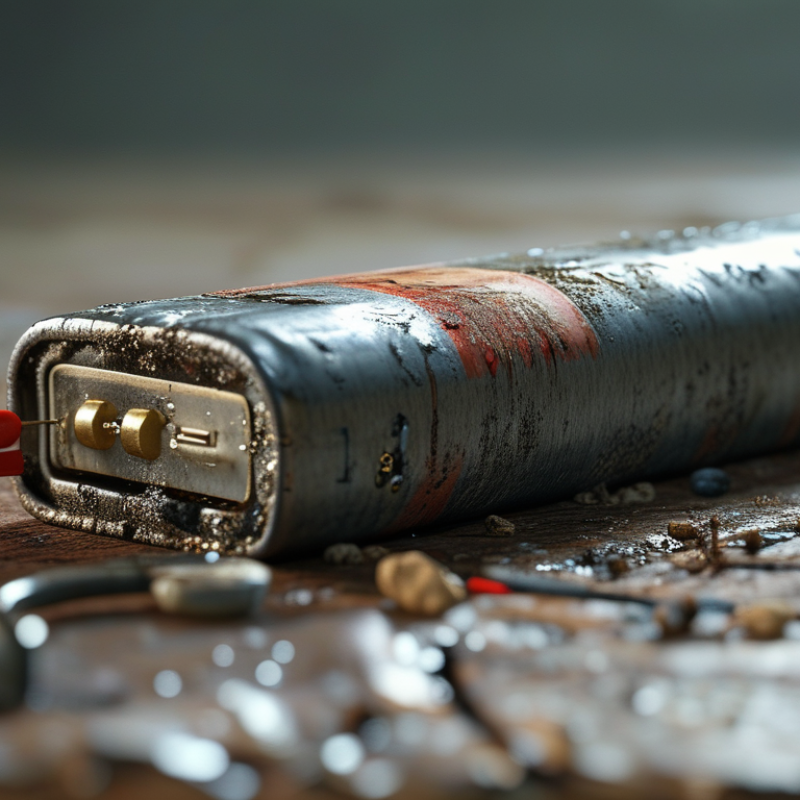
A battery sitting dead for one year changes internally, even when its case looks normal. Lead-acid batteries can lose roughly 3–5% of their charge monthly through self-discharge, according to Battery University’s technical review BU-201. After twelve months, that loss can become deep discharge. Sulfation may harden onto the lead plates, reducing the active surface area. The Battery Council International also identifies sulfation as a major cause of early lead-acid battery failure.
Lithium-ion batteries behave differently. Their monthly self-discharge is usually lower, often near 2–3% under normal storage conditions. However, protection circuits may disconnect the pack after its voltage falls too far. The International Electrotechnical Commission’s IEC 62133-2 safety standard requires controlled testing for abnormal charging and low-voltage risks. A deeply depleted lithium battery can develop copper dissolution, internal damage, or swelling. It may still show life. That does not mean it is safe to recharge.
I used to assume a slow charger could revive almost anything. That was too simple. A technician should inspect voltage, swelling, corrosion, leakage, and heat before testing recovery. Lead-acid batteries sometimes respond to a regulated, low-current charge. A lithium pack should use its specified charger and careful voltage monitoring. Stop immediately if it becomes hot, smells unusual, or changes shape. Never force current into a battery that reads zero volts or shows physical damage. A one-year-dead battery may recover briefly, but its capacity and reliability can remain seriously compromised.
Can a dead battery be recharged after a year? Sometimes, but age alone does not decide it. Start with a careful visual inspection. Do not charge a battery with cracks, swelling, leaking fluid, corrosion around damaged terminals, or a burnt smell. Never recharge a frozen battery. Move it outdoors or into a well-ventilated area, and wear eye protection. The Battery Council International reports that lead batteries achieve about a 99% recycling rate in North America, so failed units should be recycled safely.
Measure the resting voltage with a digital multimeter. A typical 12-volt lead-acid battery near 12.6–12.8 volts is usually fully charged. Around 12.2 volts suggests significant discharge. Below 10.5 volts, internal sulfation or a failed cell becomes more likely. These figures are practical service benchmarks, not guarantees. SAE J537 testing also shows why voltage alone cannot confirm battery health. Capacity and cold-cranking performance require controlled testing.
Use a charger with the correct battery mode and current limit. Begin slowly. Stop immediately if the case becomes hot, vents heavily, or produces a sharp odor. A charger refusing to start can indicate excessive internal damage. Lithium batteries need extra caution; do not revive one below its permitted voltage or with a damaged casing. Follow the battery maker’s technical limits. The easy mistake is trusting one reading. Recheck voltage after several hours of rest, then test under load. A battery may accept charge yet collapse within seconds. That result needs replacement, not optimism.
7 Tips: Can a Dead Battery Be Recharged After a Year?
A battery stored for a year is not automatically beyond recovery. Its chemistry matters more than its age. Lead-acid batteries may regain some capacity after slow, controlled charging. However, sulfation can cause permanent damage. Nickel-metal hydride batteries sometimes recover, but they may lose usable runtime. Lithium-ion batteries require greater caution. Deep discharge can trigger protective shutdown or internal damage. Do not recharge a swollen, cracked, leaking, or hot battery.
Tip 1: Check the battery’s chemistry and voltage with a suitable meter. Tip 2: Inspect the case, terminals, and storage area carefully. Tip 3: Use a charger designed for that battery type. Tip 4: Start with a low current when the manufacturer permits it. A year of neglect changes the risk. I have seen batteries show normal voltage, then collapse under a small load.
Tip 5: Charge on a nonflammable surface, away from moisture and heat. Tip 6: Stop immediately if the battery becomes hot, smells unusual, or vents. Tip 7: Test capacity after charging, not voltage alone. Non-rechargeable alkaline cells should never be recharged. Lithium-ion cells that remain at zero volts may be unsafe to revive. In uncertain cases, professional testing is wiser than repeated charging. My own mistake was trusting a fresh voltage reading; capacity testing revealed the battery was nearly useless.
| Tip | Battery type | What may happen after one year discharged | Recovery outlook | Recommended action | Safety note |
|---|---|---|---|---|---|
| 1. Identify the chemistry first | Any rechargeable or non-rechargeable cell | Different chemistries respond very differently to deep discharge. A zero reading may also indicate a failed connection or an internal safety cutoff. | Cannot be judged safely without identification. | Read the label, charger instructions, and nominal voltage before connecting a charger. | Never use a charger intended for a different chemistry or voltage. |
| 2. Check for physical damage | All battery types | Long-term storage can reveal swelling, leakage, corrosion, cracked cases, or heat damage. | Do not attempt recovery if damaged. | Isolate the battery from metal objects and follow local hazardous-waste guidance. | Do not puncture, compress, freeze, open, or dispose of batteries in household fire. |
| 3. Test lead-acid batteries carefully | Flooded, AGM, or gel lead-acid | Extended discharge can cause sulfation, capacity loss, and sometimes freezing damage in flooded batteries. | Sometimes recoverable, often with reduced capacity. | Use a compatible, current-limited charger with a recovery mode only when the manufacturer permits it. Re-test capacity after charging. | Charge in a ventilated area; avoid sparks and do not charge a frozen or visibly damaged battery. |
| 4. Consider nickel-based batteries | Nickel-cadmium or nickel-metal hydride | They can self-discharge during storage. Nickel-cadmium may tolerate deep discharge better than many other rechargeable types, while nickel-metal hydride may lose capacity or develop cell imbalance. | Often recoverable if cells are not damaged. | Use the correct charger and monitor temperature. Replace the pack if it becomes hot, leaks, or shows poor capacity after a controlled cycle. | Do not leave an old pack unattended while charging. |
| 5. Treat lithium batteries as a special case | Lithium-ion or lithium-polymer | A protection circuit may disconnect an over-discharged pack. Severe over-discharge can cause copper dissolution, internal shorts, or permanent capacity loss. | Possible only when within safe limits; a zero-voltage pack may be unsafe. | Use only the original or an approved charging system. If swollen, hot, damaged, or deeply discharged, have it assessed or recycle it. | Do not bypass the protection circuit or apply a direct “boost” charge to a bare cell. |
| 6. Never recharge primary batteries | Alkaline, zinc-carbon, lithium primary, and other non-rechargeable cells | Chemical reactions are not designed for reverse charging. Attempting to recharge can cause leakage, rupture, or fire. | Not safely recoverable by charging. | Replace the cell and recycle it through an appropriate collection program. | Do not place disposable batteries in a rechargeable-battery charger. |
| 7. Verify capacity, not just voltage | Any rechargeable battery that appears to charge | A battery can show normal voltage immediately after charging while having very low usable capacity or excessive self-discharge. | Recovery is meaningful only if it passes a controlled capacity test. | Allow the battery to rest, check for abnormal voltage drop, and perform a manufacturer-approved discharge test. | Stop testing if the battery heats rapidly, swells, leaks, or produces an unusual odor. |
Important: A battery that has been discharged for a year may be permanently damaged even if it accepts a charge. When the chemistry, condition, or charging history is uncertain, replacement or professional assessment is safer than attempting recovery.
Can a dead battery be recharged after a year?
Sometimes, but the battery’s chemistry and condition matter. A deeply discharged lead-acid battery may accept a slow charge, while a lithium battery can become unsafe after long storage. Age alone is not the only concern. Heat, moisture, and physical damage can change the result.
Work in a dry, ventilated area. Wear eye protection and keep sparks away. Inspect the case, terminals, and cables before connecting anything.
Do not recharge a swollen, cracked, leaking, or hot battery. Recycle it through an approved collection service instead.
Check the battery voltage with a suitable meter. If the reading is extremely low, an ordinary charger may reject it. Never force a charge with improvised wiring.
Use a charger designed for that battery type, and match its voltage carefully. Start with the lowest recommended current. Stay nearby.
Check the battery every few minutes for heat, odor, or swelling. Stop immediately if anything seems abnormal.
If charging begins normally, allow a full cycle under supervision. Disconnect the charger before testing the battery under load.
A voltage reading alone can mislead you. The battery may show recovery, then collapse quickly.
I would repeat the test after several hours, because one successful charge proves little. In practice, a battery stored dead for a year often has permanent capacity loss. Reusing it in critical equipment may be a poor decision, even when it appears to work.
A battery left dead for one year is not automatically recoverable. Lead-acid plates can develop hard sulfation during long storage. This damage reduces charging capacity and increases internal resistance. Battery Council International industry guidance places typical automotive battery life at three to five years. A year without charging can consume much of that useful life.
Replacement is safer when the case bulges, leaks, cracks, or smells strongly of sulfur. Do not recharge it. A workshop should also replace a battery that fails a calibrated load test after charging. SAE J537 testing standards help technicians assess starting performance under controlled conditions. A battery showing 12.6 volts may still collapse under load. Voltage alone can mislead.
Tip 1: Inspect first. Wear eye protection, clean corrosion carefully, and check the electrolyte level only on serviceable designs.
Tip 2: Test before buying. After charging, let the battery rest for several hours. Around 12.6 volts suggests a full charge, but it does not prove health.
Tip 3: Use a smart charger with a recovery mode. Stop if the battery overheats, swells, or remains below normal voltage.
Tip 4: Replace it when capacity stays weak. Recharging a severely sulfated battery may provide one successful start, then fail beside a cold driveway.
My practical mistake was trusting a quick voltage reading. A proper load test would have exposed the weakness earlier. Storage matters too: disconnect the battery and maintain it periodically, rather than leaving it completely discharged.
: Sometimes, yes. Lead-acid batteries may accept slow charging. Lithium batteries can suffer deeper internal damage.
Monthly self-discharge can leave it deeply depleted. Sulfation may harden on the plates and reduce usable capacity.
Its protection circuit may disconnect the pack. Severe depletion can cause internal damage, swelling, or unsafe charging behavior.
Check for cracks, swelling, leakage, corrosion, heat, and unusual smells. Looks can mislead you.
Around 12.6–12.8 volts usually indicates full charge. Below 10.5 volts may suggest sulfation or a failed cell.
No. A battery may show normal voltage, then collapse under load. Capacity testing gives a clearer answer.
Use the correct charger and battery mode. Begin with the lowest recommended current in a dry, ventilated area.
Stop if the battery becomes hot, swells, leaks, vents heavily, or smells sharp. Never force current into a damaged or zero-volt battery.
Let it rest for several hours, then test it under load. Temporary recovery does not prove reliable capacity.
Often, no. A year of deep discharge can cause permanent capacity loss. Recycling may be the wiser choice.
Can a dead battery be recharged after sitting for a year? Sometimes, but the answer depends on its chemistry, condition, and storage environment. During long-term discharge, a battery may develop sulfation, internal corrosion, leakage, or permanent capacity loss. Before attempting a recharge, inspect it for swelling, cracks, leaks, unusual odors, or severe corrosion, and measure its voltage with a suitable meter. Any battery showing physical damage or extreme voltage loss should not be recharged.
Some lead-acid batteries may recover partially if they have been stored in a cool, dry place and remain structurally sound, while many disposable, sealed, or deeply degraded batteries are not suitable for recovery. For a safe attempt, use a compatible charger with the correct voltage, begin with a low charging rate, monitor temperature and progress, and stop immediately if the battery becomes hot, swollen, or unstable. If it cannot hold a charge, recharge time is excessive, or damage is visible, replacement is the safer choice.

Hyper Charger