Charging a 48v golf cart battery efficiently is crucial for optimal performance. Understanding how long it takes to charge these batteries can help users plan better. Typically, the charging time for a 48v system can range from 4 to 8 hours, depending on various factors. Studies indicate that usage patterns and battery condition heavily influence this timeframe.
For instance, a report by the Battery Council International states that regular maintenance can enhance battery life and efficiency. This brings us to the question, how long does it take to charge a 48v golf cart battery? While this can vary widely, aligning charging practices with battery specifications is essential for longevity.
Moreover, an insightful industry survey revealed that many users overlook simple yet effective charging strategies, leading to extended downtimes. Some owners report charging their batteries overnight, but forgetting to disconnect them on time. Monitoring the charging process is not just a matter of convenience; it impacts overall performance and battery health. Acknowledging these factors can be the key to maximizing your golf cart's efficiency.
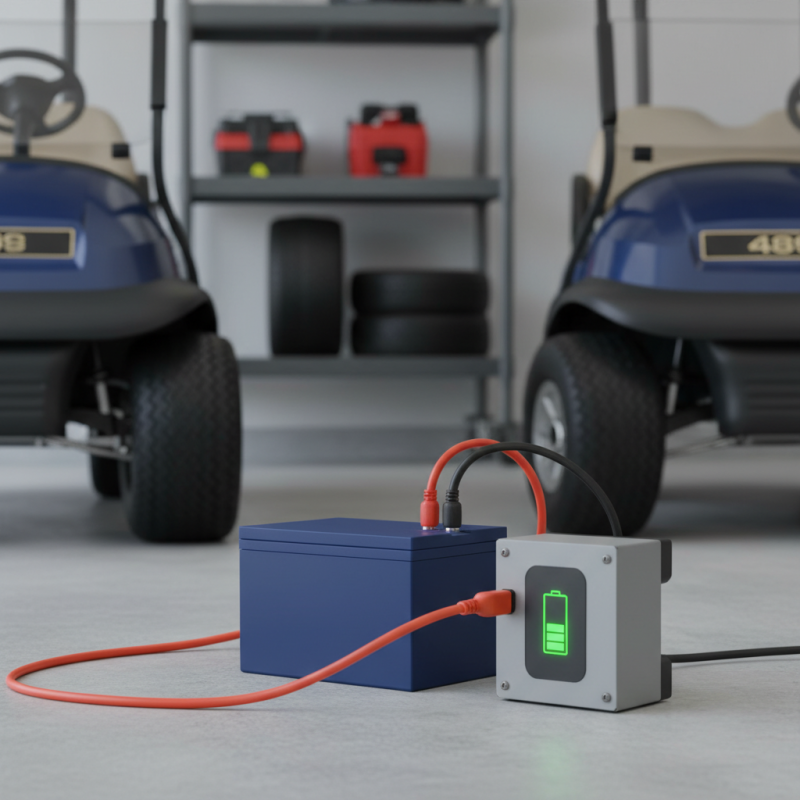
Charging a 48v golf cart battery requires some understanding of the fundamentals. Most 48v systems employ six 8v batteries connected in series. Each battery needs to be monitored closely. Proper voltage levels are essential for optimal charging. If one battery is significantly weaker, it impacts the entire system's performance.
Charging time varies based on charger amperage and battery condition. A typical fully drained battery bank might take 8 to 12 hours to charge fully. However, a weak battery can lengthen this time. Overcharging can also damage cells. Using an automatic charger helps prevent this issue. It stops charging once batteries reach full capacity.
Regular maintenance enhances battery life. Check water levels in flooded batteries every month. Ensure connections are clean and tight. Many golf cart owners overlook these details. It is essential to understand that prolonged neglect can lead to diminished performance. Taking these small steps can prolong battery life significantly.
Charging a 48v golf cart battery efficiently requires understanding several factors. The battery's capacity is crucial. A higher capacity often means longer charging times. Typically, a standard 48v battery takes between 6 to 10 hours to charge fully. However, charging habits can vary based on usage and maintenance.
The charger type also impacts charging duration. Some modern chargers offer faster charging options. Yet, using an inappropriate charger can lead to battery degradation. Temperature conditions play a role too. Extreme heat or cold can affect charging efficiency. Batteries generally prefer moderate temperatures for optimal performance.
Lastly, age and condition of the battery are significant. Older batteries may not hold charge as efficiently. Regular inspection can identify issues, like sulfation, which can slow charging. It is essential to monitor your battery's health regularly for the best charging experience. These elements highlight the need for careful charging practices. Understanding them can enhance the life and efficiency of your 48v golf cart battery.
This chart shows the charging time for a 48V golf cart battery using different current levels. Higher amperage results in reduced charging time. A 10A charger takes approximately 8 hours, while a 25A charger can do the same job in about 4 hours.
Charging a 48v golf cart battery efficiently requires attention to detail. Understanding the right methods can significantly extend battery life and improve performance.
Charging times can vary based on battery type and charger. Generally, a full charge takes about 4 to 8 hours. However, fully depleting your battery before charging is not ideal. Deep discharges can damage the battery over time. Try to recharge your battery when it drops to 30% capacity.
Tips: Always use a compatible charger. Using the wrong charger can lead to overheating. Keep the battery clean and well-maintained. Dirt can cause poor connections and slow charging. It’s essential to check the water levels in flooded lead-acid batteries regularly. Too little water can lead to overheating and permanent damage.
In addition, charge your battery in a cool, well-ventilated area. Heat can affect performance. If you notice a drop in charging efficiency, it’s worth investigating any underlying issues. Observing these practices can enhance battery longevity.
| Charging Method | Typical Charge Time (hours) | Efficiency (%) | Best Practices |
|---|---|---|---|
| Standard Charger | 6-8 | 80 | Charge after each use |
| Smart Charger | 4-6 | 90 | Monitor battery condition |
| Fast Charger | 2-3 | 95 | Use sparingly to prolong battery life |
| Solar Charger | Varies (depends on sunlight) | 70 | Install in direct sunlight |
When charging a 48v golf cart battery, avoiding common mistakes is crucial for efficiency. One major error is neglecting the owner's manual. Each battery type may have specific charging requirements. Failing to follow these can lead to reduced performance and lifespan. Reports indicate that improper charging can shorten a battery's life by up to 30%.
Another frequent mistake is overcharging. Many users leave chargers plugged in overnight. This practice can cause battery damage and overheating. Statistics show that overcharging can reduce capacity by nearly 20%. Monitoring charge levels with a voltmeter can prevent this issue.
Tip: Always use a charger compatible with your battery type to ensure safe and effective charging.
Maintaining the battery’s temperature is essential too. Charging in extreme heat or cold can affect the charging process. Batteries are sensitive to temperature fluctuations. Engaging in regular checks can aid in preserving battery health.
Tip: Invest in a battery monitor to track temperature and state-of-charge accurately.
Charging a 48v golf cart battery correctly is crucial for safety and longevity. Research indicates that improper charging can reduce battery life by up to 30%. Always use a compatible charger to avoid overloading the battery. Overcharging can lead to overheating, which might cause damage. It’s essential that chargers have automatic shut-off features to prevent this risk.
Before charging, inspect your battery for any signs of corrosion on terminals. Use a mixture of baking soda and water to clean corrosion safely. Check the electrolyte levels if you’re using lead-acid batteries. Low levels can lead to overheating during charging. Wearing safety goggles and gloves is advisable, as battery acid can be hazardous.
Monitor the temperature while charging. Ideally, it should remain below 120°F. A higher temperature can indicate an internal problem with the battery. Experts recommend charging batteries slowly to avoid thermal runaway situations. Always charge in a well-ventilated area to disperse gases released during charging. This reduces fire risks and maintains a safe charging environment.
: A full charge typically takes 4 to 8 hours, depending on the battery type.
It's best to recharge when the battery drops to 30% capacity, not fully depleting it.
Yes, using an incompatible charger may cause overheating, reducing battery life.
Keep it clean, check water levels regularly, and inspect for terminal corrosion.
Ideally, the temperature should remain below 120°F during the charging process.
No, always charge in a well-ventilated area to disperse gases and reduce fire risks.
It's advisable to wear safety goggles and gloves to protect against battery acid.
Low levels can lead to overheating during charging, causing potential damage.
Use a mixture of baking soda and water to clean corrosion safely and effectively.
Overcharging is a mistake. It can lead to overheating and permanent damage.
Charging a 48v golf cart battery efficiently requires an understanding of several key factors. Generally, how long does it take to charge a 48v golf cart battery depends on the charger type and the battery's condition. Factors such as battery age, temperature, and initial charge level also play significant roles in determining the charging time. To optimize the charging process, it is crucial to follow best practices like using an appropriate charger, ensuring proper ventilation during charging, and regularly maintaining the battery.
Moreover, avoiding common mistakes can enhance efficiency—such as overcharging, using incorrect chargers, or failing to check water levels in flooded batteries. Safety should not be overlooked; utilizing protective gear and adhering to guidelines can prevent accidents. By understanding these aspects and employing safe charging methods, golf cart owners can ensure their batteries are charged effectively and last longer.

Hyper Charger