Understanding battery voltage is essential for ensuring optimal performance. A fully charged 12V battery should generally read between 12.6 to 12.8 volts. This range signifies that the battery is in good health. As experts like Dr. William Anderson, a battery technology researcher at the Battery Institute, point out, "Monitoring battery voltage is crucial for efficiency and longevity."
Many battery manufacturers emphasize the importance of voltage readings. A consistent reading below 12.4 volts could indicate potential issues. Industry reports suggest that regularly checking your battery’s voltage enhances performance and safety. Not every user understands this concept.
Misconceptions exist around the voltage a 12V battery displays when fully charged. Some may believe that it should sit precisely at 12.8 volts. In reality, variations can occur due to factors such as temperature and load. Keeping these factors in mind is vital for battery maintenance. Each battery may behave slightly differently, and this complexity requires attention.
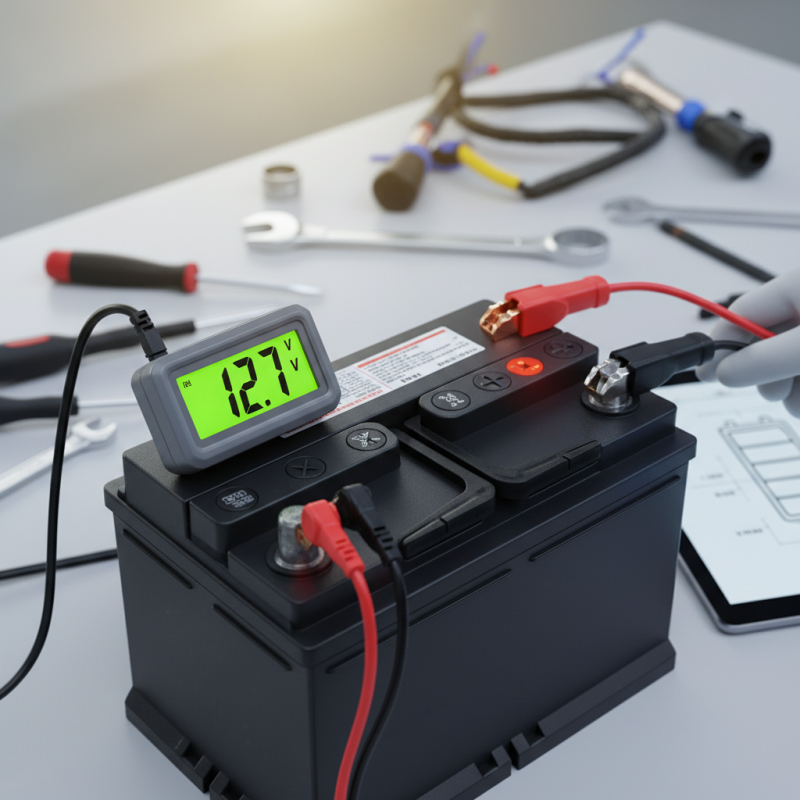
Understanding battery voltage is key to maintaining optimal performance. A fully charged 12V lead-acid battery typically reads between 12.6V to 12.8V. When fully charged, the chemical reactions inside the battery produce a voltage that reflects its charge state. If readings fall below 12.4V, the battery may need charging. Industry reports indicate that prolonged undercharging can lead to sulfation, which damages battery life.
Additionally, temperature plays a significant role in battery voltage. At lower temperatures, a battery may exhibit lower voltage readings. This can mislead users into thinking their battery is failing. According to the Battery University, for every 10°C drop in temperature, the voltage can decrease by about 0.3V. Thus, understanding these nuances is essential for accurate assessment.
Monitoring battery voltage regularly is critical in preventing unexpected failures. Many users overlook this simple but effective measure. It’s easy to take a battery's performance for granted. A basic multimeter can provide accurate voltage readings, ensuring better battery maintenance. Reliability in battery performance comes from understanding how various factors influence voltage and responding accordingly.
This chart shows the voltage readings of fully charged 12V batteries across various battery types. A fully charged 12V lead-acid battery typically reads around 12.6 to 12.8 volts, while Lithium-ion batteries may read higher due to their chemistry.
When dealing with 12V batteries, accurate voltage readings are crucial. A fully charged 12V battery typically shows between 12.6V to 12.8V. Variances occur due to temperature, battery age, and health. Keeping these factors in mind can improve your understanding of battery performance.
Taking precise voltage readings helps diagnose potential issues. An underperforming battery may show a lower voltage. Regular checks can reveal fading capacity. Ignoring these signs may lead to inconvenient situations. Sometimes, a simple misreading can misguide your approach to battery maintenance.
In a real-world application, consider testing the battery under load. This can give a clearer picture of its condition. Performing these checks isn't just about the digits. It's about knowing your battery's true state. This knowledge empowers better decisions, enhancing safety and efficiency in your usage.
A fully charged 12V lead-acid battery typically reads between 12.6V and 12.8V. This voltage reflects its optimal state. When the battery drops below 12.4V, it may be considered partially discharged. In contrast, a reading below 12.0V indicates that the battery is significantly depleted and requires immediate attention.
Industry data shows that maintaining a healthy voltage range is critical for battery longevity. A study by the American Institute of Physics highlights that regular monitoring can extend battery life by up to 30%. This is due to avoiding deep discharges which can harm the battery. However, many consumers overlook this aspect, leading to premature battery failure.
The charging voltage also plays a key role. When charging, a fully charged 12V battery should see a voltage between 13.6V and 14.4V. Yet, overcharging can cause damage and should be avoided. It is important to use an appropriate charging method to prevent voltage spikes. Consistent management of voltage not only enhances performance but ensures safety.
| Battery Type | Fully Charged Voltage Range (V) | Typical Use |
|---|---|---|
| Lead-Acid | 12.6 - 12.8 | Automotive, Solar Systems |
| AGM (Absorbent Glass Mat) | 12.7 - 12.9 | UPS, Marine Devices |
| Gel | 12.6 - 12.8 | Solar Energy Storage |
| Lithium-Ion | 12.8 - 13.6 | Electric Vehicles |
| NiMH (Nickel-Metal Hydride) | 12.0 - 12.4 | Hybrid Vehicles |
The voltage of a fully charged 12V battery can vary due to several factors.
Ambient temperature significantly impacts the readings.
In colder conditions, the voltage may drop. Conversely, heat can raise the voltage slightly.
This relationship highlights the importance of checking your battery’s voltage in different environments.
Another factor involves the battery's age and condition.
Older batteries may exhibit lower voltage even when fully charged. Internal resistance increases over time,
leading to voltage drops under load.
Regular maintenance is crucial to ensure accurate readings.
Corrosion on terminals can also affect voltage output.
Cleaning the terminals should be a priority for battery health.
Additionally, the method of measurement influences the readings.
Using a digital multimeter offers precise voltage readings.
Analog meters can provide less accurate results due to needle fluctuations.
Always ensure your measuring tools are calibrated.
Even minor discrepancies can mislead users about battery performance. Understanding these factors is vital for effective battery management.
When measuring battery voltage, safety is paramount. Ensure you wear protective gear including safety goggles and gloves. The materials and tools you use should be insulated. A short circuit can result in sparking or even explosion. Working in a well-ventilated area is also wise, as gases can accumulate.
Always start by ensuring the battery is securely placed. Use a multimeter to check the voltage effectively. Touch the probes to the correct terminals – positive to positive and negative to negative. Do not let the probes touch each other. This can cause a dangerous short circuit.
If you notice any swelling or leaks in the battery, do not proceed. Dispose of any damaged batteries according to local regulations. Remember to respect the equipment you are using. Check the leads and probes for wear. They can wear out over time, leading to inaccurate readings and potential hazards. Prioritizing safety can prevent accidents and ensure accurate results in your measurements.
: A fully charged 12V battery typically reads between 12.6V and 12.8V.
Lower temperatures can decrease voltage by about 0.3V for every 10°C drop.
Regular monitoring can prevent unexpected failures and extend battery life significantly.
A reading below 12.4V suggests the battery may be partially discharged.
A reading below 12.0V indicates significant depletion; charging is needed immediately.
Misreading voltage can lead to overlooking battery issues and result in unexpected failures.
The charging voltage should be between 13.6V and 14.4V during charging.
Prolonged undercharging may cause sulfation, which damages battery life.
Ignoring performance signs can lead to inconvenient situations and battery failure.
Testing under load provides better insight into the battery's true condition and performance.
Understanding the voltage of a fully charged 12V battery is crucial for ensuring proper functionality and longevity. A fully charged 12V battery should typically read around 12.6 to 12.8 volts. Accurate voltage readings are essential as they can indicate the health and status of the battery. Factors such as temperature, load conditions, and the specific type of battery can affect these readings, leading to variations that users should be aware of.
When measuring the voltage, safety precautions must be taken to avoid potential hazards. It’s important to ensure connections are secure and that appropriate meters are used for accurate measurements. In summary, knowing "what voltage should a 12V battery read when fully charged" helps in diagnosing battery conditions and maintaining optimal performance.

Hyper Charger