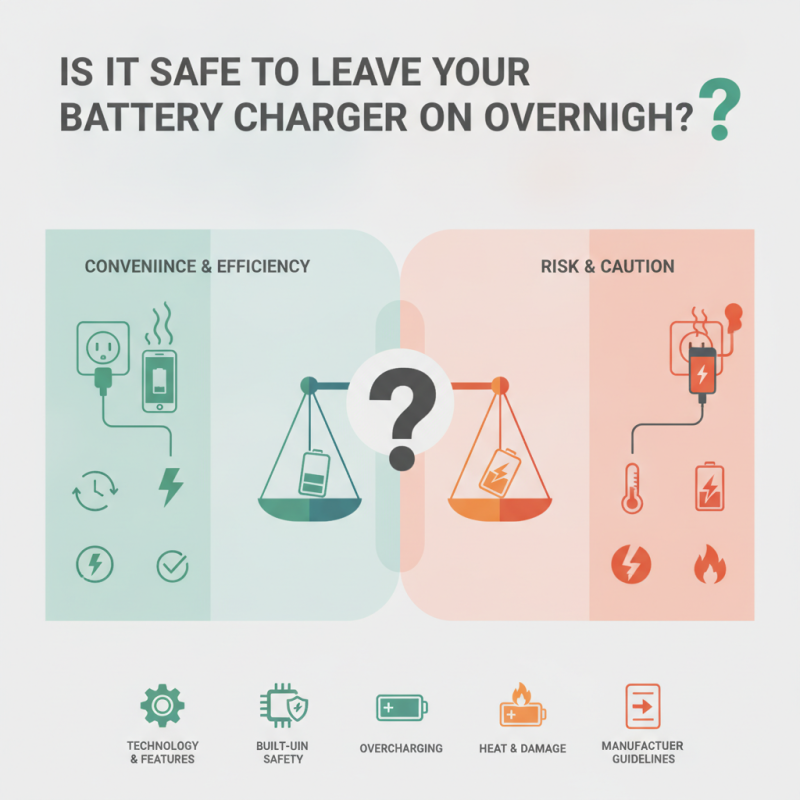
Many people wonder, "Is it safe to leave a battery charger on overnight?" This question arises as charging practices evolve with technology. Some believe it's efficient. Others worry about safety concerns.
Leaving a charger plugged in for extended periods can be both convenient and risky. Overcharging can occur with certain devices, leading to overheating. Heat is often the enemy of batteries. It can reduce durability and performance over time. Many chargers today have built-in safety features. However, not all devices are equipped equally.
Inconsistent charging practices cause confusion. Users may neglect manufacturer guidelines. This can lead to mishaps. The potential for a fire or battery damage exists. It's essential to understand how your charger performs. More insight is necessary to make informed decisions. The question remains—how safe are our charging habits?
Battery chargers play a crucial role in ensuring our devices remain powered. Understanding their functionality helps us make informed decisions. Most chargers contain an internal circuit that regulates power. This prevents overcharging, a common concern. However, not all chargers are created equal. According to a report from the National Renewable Energy Laboratory, around 50% of chargers can still draw power even when devices are fully charged.
Leaving your charger plugged in overnight can lead to inefficiencies. Many modern chargers have a cut-off feature. This feature stops the charging once the battery is full. But older models may continue to consume power. It's essential to be aware of the potential for slight battery degradation over time. Regularly check the condition of your charger and battery to prolong their lifespan.
**Tips:**
- Always use chargers suited for your device. Mismatched chargers can cause overheating.
- Unplug chargers when not in use to save energy and reduce wear.
- Monitor battery health through device settings to notice any unusual patterns.
Leaving your battery charger plugged in overnight may seem convenient, but it comes with potential risks.
Overheating is a significant concern. Many chargers generate heat while plugged in.
If left unattended, this heat can build up, potentially causing damage. This risk increases if the charger is placed on flammable surfaces.
Another issue is energy waste. Chargers can draw power even when they aren’t actively charging a device.
This "phantom load" can contribute to higher electricity bills over time. Users may overlook this subtle impact.
It’s important to remember that not all chargers are made equal. Some are designed with safety features, while others may lack these protections.
Think about the age of your charger. Older chargers may have worn-out components. This can increase the risk of malfunction.
Simple steps can help mitigate these risks. Unplugging the charger when it's not in use is a wise practice.
Regularly inspecting chargers for signs of wear or damage is also crucial.
Consider these points carefully before deciding to leave your charger plugged in overnight.
Overcharging your battery can have significant effects on its life and overall health. Many people think it's safe to leave chargers plugged in overnight. However, this common practice can lead to problems. Modern devices often have built-in protections against overcharging, but not everyone uses them effectively.
When a battery is consistently charged to its maximum capacity, the cycles of charging and discharging become harsher. This results in a gradual decrease in battery capacity. In many cases, users may not realize their batteries have already started to degrade, leading to diminished performance over time. It might be easy to overlook these details amid a busy lifestyle, but the long-term repercussions accumulate.
Heat is another concern. Charging overnight can generate heat, especially in cases of prolonged charging. This heat accelerates aging and can cause potential damage. Charging habits are often overlooked, yet they directly impact battery health. Taking a moment to unplug the charger when the battery is full can extend its life. We should reflect on our daily habits because they shape the longevity of our devices.
This chart illustrates the impact of overnight charging on battery health. As the charging duration increases, the battery health percentage tends to decrease, with overnight charging showing a significant reduction due to overcharging effects.
When it comes to charging devices, many people wonder about the safety of leaving chargers plugged in overnight. According to a study by the National Fire Protection Association, charging-related incidents account for 200 injuries and 2,000 fires annually in the U.S. alone. This highlights the importance of adopting best practices to ensure charging safety.
One essential practice is to use chargers that align with your device’s specifications. Overcharging can lead to battery damage or even overheating. The Battery University suggests that lithium-ion batteries, which power most devices today, should be charged between 20% and 80% to maximize lifespan.
Additionally, unplugging chargers when they're not in use can minimize potential hazards. Even when devices are fully charged, a charger still consumes a small amount of electricity, contributing to energy waste. Though the risk is often understated, it’s reasonable to reflect on our habits and consider unplugging chargers at night. Adopting these strategies can enhance both safety and efficiency.
Charging your devices overnight may seem convenient, but there are alternatives worth considering. Smart chargers are a great option. They regulate the power and can prevent overcharging. With a built-in timer, these chargers will stop delivering power once the battery is full. This helps prolong the lifespan of your device.
Another solution is to charge your device during the day. This might require some planning, but it allows you to monitor the charging process. You can unplug the charger once your device reaches full power. Consider using a power strip with an on/off switch. This lets you easily disconnect your charger when not in use.
Remember, some chargers can become warm during prolonged use. This is normal, but does raise concerns about safety. It’s crucial to inspect your devices regularly for signs of wear or damage. Paying attention to these details can help prevent potential hazards while ensuring your devices remain in top condition.
: Battery chargers use internal circuits to control power. This prevents overcharging and maintains battery health.
Leaving chargers plugged in can create overheating risks. Older chargers may lack safety features and cause damage.
Phantom load refers to chargers drawing power even when not actively charging. This can lead to higher electricity bills.
Regularly inspect your charger for wear. Unplug it when not in use. Use compatible chargers to avoid overheating.
Smart chargers can prevent overcharging. They stop supplying power once devices are fully charged, improving battery longevity.
Yes, charging during the day allows you to monitor the process, preventing potential damage from overheating.
It's normal for chargers to warm up. However, check for damage and ensure they are not placed on flammable surfaces.
Not all chargers behave the same. Some have better design features to prevent power draw when the device is fully charged.
Using chargers not suited for your device can lead to overheating and damage. Always use the recommended charger type.
Regularly monitor your battery health through device settings. Look for unusual patterns that may indicate issues.
The question "Is it safe to leave a battery charger on overnight" has become a common concern among device users. Understanding how battery chargers operate is crucial; they provide the necessary power to charge devices, but can also pose risks if left plugged in for extended periods. One of the main concerns is the potential for overcharging, which can compromise battery life and health, leading to performance issues over time.
To ensure safe charging practices, users are encouraged to avoid leaving chargers plugged in overnight. Instead, utilizing timers or smart chargers can help manage charging cycles effectively. Implementing best practices not only prolongs battery lifespan but also enhances overall device safety. By following these guidelines and exploring alternatives to overnight charging, users can make informed decisions about their charging habits.

Hyper Charger