Can I Use a Lead Acid Charger for Lithium Batteries?

Time:2026-05-01 Author:Henry
0%

Charging batteries correctly is crucial for their performance and longevity. Many users may wonder, "Can I use a lead-acid charger on a lithium battery?" This question reflects a common confusion that arises in the world of battery maintenance. Lithium batteries and lead-acid batteries have different charging requirements.

Using a lead-acid charger for lithium batteries can lead to serious issues. Lithium batteries require specific charging profiles to avoid overcharging. An incorrect charger can damage the battery or reduce its lifespan. It’s vital to understand these differences.

Experts recommend using chargers specifically designed for lithium technology. These chargers monitor temperature and charge levels, ensuring safety and efficiency. Relying on a lead-acid charger may seem convenient, but it can compromise battery health. Therefore, it’s wise to invest in the appropriate equipment for the best results.
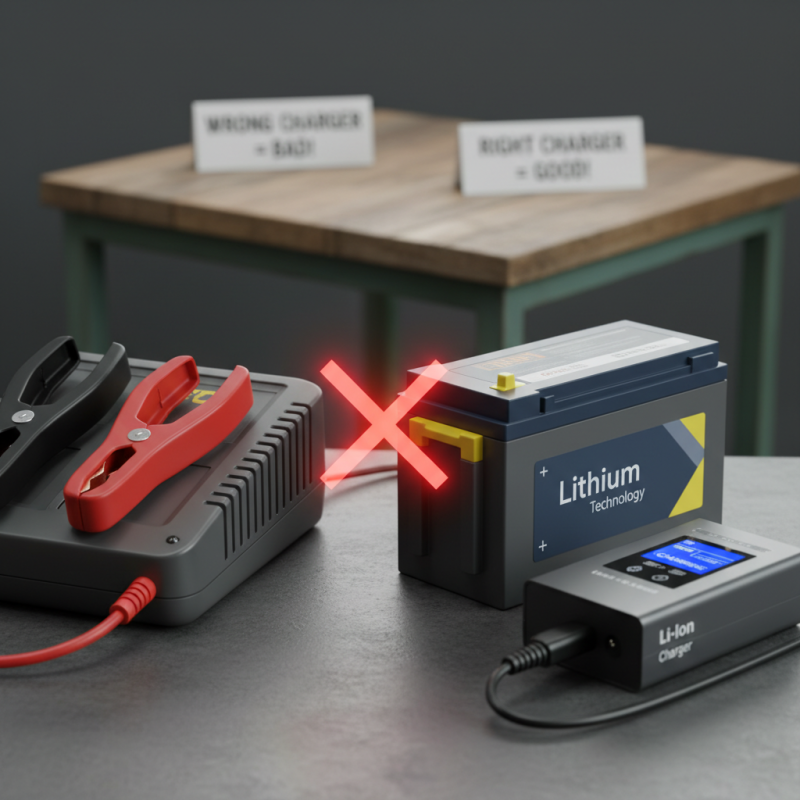
Can I Use a Lead Acid Charger for Lithium Batteries?

Understanding Lead Acid and Lithium Batteries

Lead acid and lithium batteries serve different purposes. Lead acid batteries are widely used in cars and backup power systems. They are reliable and affordable. However, they also weigh more and have a shorter lifespan than lithium batteries. Lithium batteries, on the other hand, have gained popularity in recent years. They are lighter, last longer, and charge faster. These features make them ideal for modern electronics and electric vehicles.

Understanding the differences means recognizing their charging needs. Lead acid chargers apply higher voltages. This can damage lithium batteries. Using a lead acid charger on lithium batteries may lead to overheating. It can also significantly reduce battery life. Lithium batteries require specialized chargers to manage their unique chemistry. Proper charging is crucial for safety and longevity. Misusing chargers can have serious consequences.

Choosing the right charger is a critical task. Overlooking this step can lead to headaches later on. Knowledge about battery types is not just a guideline; it's essential. It’s important to invest time in understanding these differences. A little research can save complications in the future. Each battery technology has its strengths and weaknesses. Knowing them allows for better decisions.

Can I Use a Lead Acid Charger for Lithium Batteries?

Battery Type Voltage Range Charging Current Charger Compatibility Cycle Life Weight
Lead Acid 12V, 24V, 48V 10-20% of capacity Compatible 300-500 cycles Heavy
Lithium-ion 12V, 24V, 36V, 48V 0.5C to 1C Not Compatible 500-2000 cycles Lightweight
Lithium Iron Phosphate (LiFePO4) 12V, 24V 0.5C Not Compatible 2000-5000 cycles Lightweight

Key Differences Between Lead Acid and Lithium Battery Charging

When it comes to charging lithium batteries, using a lead acid charger is not advisable. Lead acid and lithium batteries have distinct charging requirements. Lithium batteries operate with a constant voltage of around 4.2 volts per cell, while lead acid batteries use a voltage ranging from 2.2 to 2.4 volts per cell. According to industry research, improper charging can reduce the lifespan of lithium batteries by up to 30%.

Moreover, the charging algorithm differs significantly. Lithium batteries require specific charge profiles, such as CC/CV (constant current/constant voltage) charging. Lead acid chargers do not follow this method, potentially causing overcharging in lithium batteries. This can lead to overheating and, in extreme cases, battery failure. A recent study showed that charging lithium batteries with incorrect chargers can lead to safety hazards, including fire risk.

Battery management systems (BMS) in lithium batteries help to prevent overcharging. However, relying solely on this system can be risky without an appropriate charger. Furthermore, the charging time is usually shorter for lithium batteries, often just a few hours compared to lead acid's extended recharge times. Understanding these differences is crucial for maintaining battery health and ensuring safety.

Risks of Using a Lead Acid Charger on Lithium Batteries

Using a lead-acid charger on lithium batteries presents significant risks. Lithium batteries, unlike lead-acid ones, have different charging profiles. They typically require a constant current followed by a constant voltage phase. Lead-acid chargers are not designed for this. Overcharging can occur, leading to potential overheating and battery damage.

According to a report by the International Energy Agency, improper charging can shorten lithium battery life by as much as 30%. This data highlights the importance of matching charger types with battery chemistry. Furthermore, it’s essential to consider safety features. Many lithium batteries have built-in protection circuits, but these may not suffice against the incorrect voltage supplied by a lead-acid charger.

Potential thermal runaway risks cannot be ignored. This situation happens when the battery cells overheated lead to a fire or explosion. The National Fire Protection Association emphasizes this risk, citing inadequate charging methods as a common cause of lithium battery fires. Users must recognize these hazards to ensure safe and effective charging practices.

Comparison of Charging Efficiency: Lead Acid Charger vs. Lithium Charger

This chart illustrates the charging efficiency of Lead Acid chargers compared to Lithium battery chargers. The data reflects how well each type of charger maintains battery health over various charging cycles.

Optimal Charging Solutions for Lithium Batteries

When considering optimal charging solutions for lithium batteries, it’s essential first to understand their unique requirements. Lithium batteries demand a specific charging profile, distinguished from lead acid batteries. These batteries require a constant current, followed by a constant voltage phase, ensuring safety and longevity.

Industry reports indicate that improper charging can significantly reduce a lithium battery's lifespan. For example, charging at higher voltages can lead to overheating, risking thermal runaway. Studies suggest that maintaining the charging voltage between 3.6V and 4.2V enhances performance. Many users underestimate these specifications, leading to avoidable failures.

Battery management systems (BMS) play a crucial role in optimizing charge cycles for lithium batteries. They monitor each cell’s voltage, providing precise control during charging. Utilizing a charger designed for lithium chemistry helps to mitigate risks associated with overcharging and can enhance efficiency. However, miscommunication around charger suitability remains prevalent. This indicates a need for greater education on battery technology and best practices.

Best Practices for Lithium Battery Maintenance and Charging

When it comes to lithium battery maintenance, proper charging is essential. Lithium batteries operate differently than lead-acid batteries. Using a charger designed for lead-acid batteries can lead to overcharging and potential damage. Lithium batteries require specific charging profiles, typically using a constant current/constant voltage (CC/CV) method. According to a report from the Battery University, overcharging can reduce the battery's lifespan by up to 30%.

Monitoring temperature during charging is crucial. Lithium batteries should be charged in a temperature range of 0°C to 45°C. Charging at extreme temperatures can cause swelling or even thermal runaway. Industry insights indicate that chargers with built-in temperature compensation can enhance battery safety and performance. Adequate ventilation while charging also plays a vital role in maintaining battery health.

Regular checks for voltage imbalance among cells can prolong battery life. Utilizing a battery management system (BMS) helps ensure that each cell charges evenly. Reports suggest that neglecting this can lead to reduced capacity and safety hazards over time. A proactive approach to monitoring and maintaining lithium batteries leads to efficient performance and longevity.

FAQS

: What is the proper charging profile for lithium batteries?

: Lithium batteries require a constant current, followed by a constant voltage phase for safe charging.

What happens if lithium batteries are charged improperly?

Improper charging can reduce a battery's lifespan significantly, potentially by up to 30%.

What voltage range should lithium batteries be charged at?

Charging should be maintained between 3.6V and 4.2V to maximize performance.

Why is temperature monitoring important when charging lithium batteries?

Charging outside 0°C to 45°C can lead to swelling or thermal runaway.

How can a battery management system (BMS) help?

A BMS monitors cell voltage and ensures even charging, which enhances battery lifespan.

Can using the wrong charger damage lithium batteries?

Yes, using chargers meant for lead-acid batteries can cause overcharging and potential damage.

How often should voltage imbalances be checked among battery cells?

Regular checks are important to maintain capacity and safety over time.

What role does ventilation play in charging lithium batteries?

Adequate ventilation helps maintain battery health during the charging process.

Are there any signs that a lithium battery is overcharged?

Swelling or excessive heat during charging may indicate overcharging; it should be addressed immediately.

What is a common misconception about lithium battery charging?

Many users underestimate the importance of adhering to specific charging specifications, leading to failures.

Conclusion

When considering the question "Can I use a lead-acid charger on a lithium battery?", it's crucial to understand the distinct characteristics and charging requirements of these two battery types. Lead-acid batteries and lithium batteries differ significantly in chemistry, capacity, and charging protocols. Utilizing a lead-acid charger for lithium batteries can pose serious risks, including the potential for overcharging, which can lead to battery damage or even safety hazards.

To ensure optimal performance and longevity of lithium batteries, it is essential to use chargers specifically designed for them. These chargers offer the appropriate voltage and charging curves necessary for safe and effective charging. Additionally, following best practices for maintenance, such as avoiding extreme temperatures and regularly checking battery health, will further enhance battery performance and lifespan. In summary, for safe and efficient charging of lithium batteries, it is best to refrain from using a lead-acid charger and instead use designated lithium charging solutions.

Henry

Henry

Henry is a dedicated marketing professional with a profound expertise in the company's offerings. With years of experience in the industry, he possesses an impressive understanding of the market dynamics and consumer behaviors that drive success. Henry is committed to sharing his insights through......