How Does Temperature Impact Battery Charging Efficiency in 2026?

Time:2026-06-16 Author:Aria
0%

In 2026, the inquiry into "How does temperature affect battery charging efficiency" takes on increasing importance. As the demand for sustainable energy solutions grows, understanding the relationship between temperature and battery performance is crucial. Extreme temperatures can substantially impact battery systems, influencing both their safety and longevity.

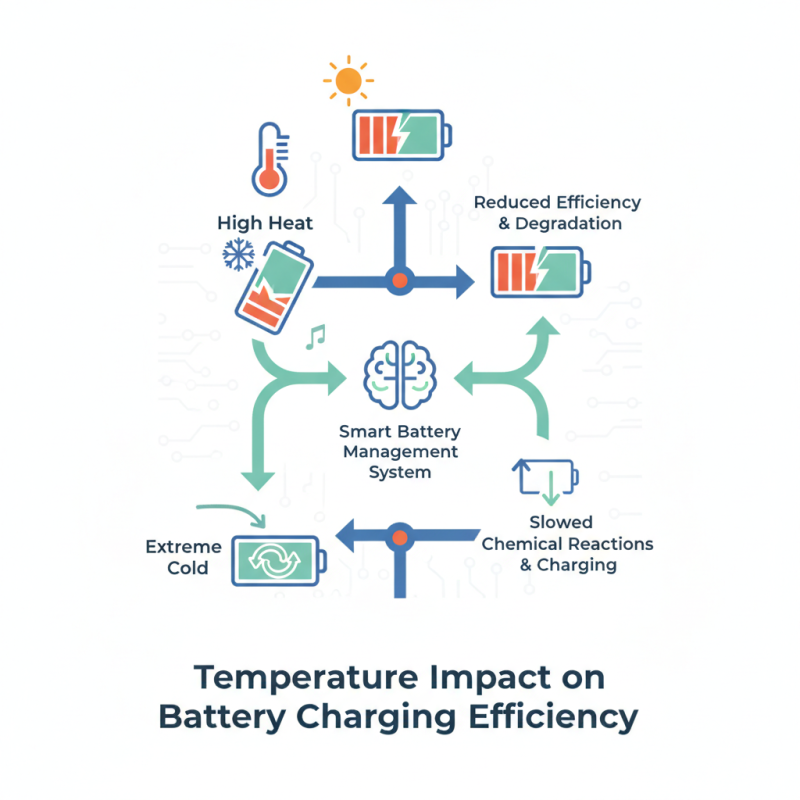
Research shows that charging efficiency declines in high heat and extreme cold. For example, lithium-ion batteries may experience rapid degradation at elevated temperatures. Conversely, lower temperatures can lead to reduced chemical reactions, slowing down the charging process. These factors are pivotal for manufacturers and consumers alike.

Battery management systems must adapt to temperature variations for optimal efficiency. It’s essential to implement smart technologies that adjust charging protocols based on real-time temperature data. Yet, there are gaps in current practices that warrant further exploration. Addressing these issues can significantly enhance battery performance and sustainability.
How Does Temperature Impact Battery Charging Efficiency in 2026?

Impact of Extreme Temperatures on Battery Chemistry

Extreme temperatures significantly affect battery chemistry and charging efficiency. High temperatures can cause battery components to degrade faster. For instance, lithium-ion batteries can experience decreased capacity and increased thermal runaway risks if temperatures exceed 30°C (86°F). Reports indicate that charging efficiency can drop by as much as 20% under such conditions.

Conversely, low temperatures can lead to sluggish chemical reactions within the battery. When temperatures fall below 0°C (32°F), the internal resistance of the battery increases. This results in longer charging times and could lead to incomplete charging cycles. A study found that charging at -10°C (14°F) can reduce charging efficiency by nearly 30%.

The impact of temperature on battery performance raises important questions for manufacturers and users alike. Inconsistent charging times and reduced battery life can lead to user dissatisfaction. Future research must address these temperature-induced challenges to improve battery technology further.

Optimal Charging Temperatures for Different Battery Types

Battery performance is significantly influenced by temperature. Optimal charging temperatures vary between battery types. For lithium-ion batteries, the ideal range is between 20°C and 25°C. At these temperatures, the charging process is efficient. However, charging at lower temperatures can prolong charging time. In extreme cold, these batteries may fail to charge effectively.

For lead-acid batteries, the optimal charging temperature differs slightly. They function best at 25°C. However, charging at higher temperatures can lead to damage. This delicate balance is critical for preserving battery life. Overheating can result in gas release, decreasing efficiency.

Understanding how temperature affects different batteries is essential for users. Many overlook this factor. Poor charging practices can lead to decreased performance. Even small temperature fluctuations can have a noticeable impact. Recognizing these nuances helps in maximizing battery longevity. It is a complex relationship that requires attention.

Effects of Low Temperatures on Charge Acceptance Rates

Low temperatures can significantly affect battery charging efficiency. When temperatures drop, batteries tend to show reduced charge acceptance rates. This effect is especially noticeable in lithium-ion batteries, commonly used in electric vehicles and portable electronics.

At low temperatures, the chemical reactions within the battery slow down. This leads to a lower capacity for absorbing and retaining energy during the charging process. For example, a battery that might charge at 100% efficiency at room temperature may only achieve 70% efficiency in freezing conditions. Consequently, users may find their devices take longer to reach full charge, or battery life diminishes quickly in cold weather.

This situation highlights the importance of proper battery management and thermal regulation. Are current technologies sufficient to handle these issues? Many manufacturers are investing in better insulation and smart charging systems. However, significant challenges remain in optimizing battery performance across varying temperatures. Finding a balance between charging speed and efficiency is critical for future advancements.

How Does Temperature Impact Battery Charging Efficiency in 2026? - Effects of Low Temperatures on Charge Acceptance Rates

Temperature (°C) Charge Acceptance Rate (%) Charging Time (hours) Battery Efficiency (%)
-20 40 12 60
-10 55 10 72
0 75 8 85
10 85 6 90
20 95 5 95

High Temperature Risks: Overheating and Degradation

High temperatures can significantly impact battery charging efficiency. The optimal range for most lithium-ion batteries is between 20°C to 25°C. However, when temperatures rise above 30°C, risks emerge. Battery overheating can occur, leading to thermal runaway. This phenomenon can cause fires and explosions, posing serious safety concerns.

Data from industry reports indicate that at 40°C, battery degradation accelerates by up to 20%. This means a battery that could last 10 years might only serve 8 years under such conditions. Increased temperatures affect the electrolyte's viscosity. It results in reduced ionic conductivity. Consequently, charging efficiency declines significantly.

Furthermore, high temperatures can also cause mechanical stress on battery components. This stress leads to microcracks and short-circuiting. Users often overlook these risks, believing batteries are invincible. Understanding temperature's role is vital for safe usage. Ultimately, managing temperature during charging is crucial for longevity and safety.

Future Innovations in Temperature Regulation for Batteries

In 2026, temperature regulation is a critical focus for battery technology. Research indicates that optimal charging occurs between 20°C and 25°C. Outside this range, efficiency drops significantly. A report by the International Energy Agency (IEA) noted that temperature fluctuations can reduce charging speed by up to 30%. This inefficiency leads to extended charge times and potential battery damage.

Innovative solutions are emerging to tackle these challenges. Advanced thermal management systems now integrate phase change materials (PCMs) and improved insulation. These technologies maintain stable temperatures during charging. The National Renewable Energy Laboratory (NREL) revealed that batteries with effective thermal regulation can achieve up to 20% more capacity in extreme conditions. This innovation could greatly extend battery life and enhance overall performance.

However, the implementation of these systems is not without drawbacks. Increased complexity and costs can deter manufacturers from adopting these innovations. There remains much to learn about the long-term reliability of these thermal management solutions. As the industry evolves, ongoing research and testing will be essential in finding the right balance between efficiency and practicality.

Impact of Temperature on Battery Charging Efficiency in 2026

The chart above illustrates the impact of temperature on battery charging efficiency in 2026. As the temperature varies, the charging efficiency peaks at 20°C, showing optimal performance, while extreme temperatures result in decreased efficiency.

FAQS

: How do low temperatures affect battery charging?

: Low temperatures reduce charge acceptance rates in batteries, especially lithium-ion ones.

What happens to battery efficiency in freezing conditions?

A battery might charge at 100% efficiency at room temperature but only reach 70% efficiency in freezing weather.

What are the risks of high temperatures for batteries?

High temperatures can lead to overheating, thermal runaway, and significant safety concerns like fires.

How much can battery degradation accelerate at high temperatures?

Battery degradation can speed up by up to 20% at 40°C, shortening battery lifespan significantly.

Why is temperature management important for batteries?

Proper temperature management ensures safety, longevity, and optimal charging efficiency during use.

What innovations are being developed for battery temperature regulation?

Advanced thermal management systems using phase change materials are emerging to maintain stable temperatures.

What challenges do manufacturers face with new temperature regulation technologies?

Increased complexity and costs can hinder the adoption of innovative thermal management solutions.

Is there a significant performance gain from effective thermal regulation?

Yes, batteries with good thermal regulation can achieve up to 20% more capacity in extreme temperatures.

Are current battery technologies sufficient for temperature management?

Current technologies show promise but still face challenges in optimizing performance across varying temperatures.

What will be critical in battery technology advancements by 2026?

Research will focus on finding the right balance between efficiency and practicality in battery temperature regulation.

Conclusion

The article titled "How Does Temperature Impact Battery Charging Efficiency in 2026?" explores the significant role that temperature plays in the efficiency of battery charging. It discusses how extreme temperatures can alter battery chemistry, affecting performance and longevity. Specifically, the article highlights that different battery types have optimal charging temperatures, which, when exceeded or not met, can lead to decreased charge acceptance rates in low temperatures and increased risks of overheating and degradation in high temperatures.

Furthermore, the article outlines potential future innovations aimed at enhancing temperature regulation in batteries, which could ultimately improve overall charging efficiency. By addressing these temperature-related challenges, the study provides insights into how temperature affects battery charging efficiency and suggests pathways for advancements in battery technology.

Aria

Aria

Aria is a dedicated marketing professional with a deep passion for innovative strategies and a keen understanding of our company's product offerings. With a wealth of experience in the industry, Aria excels at crafting engaging content that highlights the unique features and benefits of our......