Top 10 AMR Battery Charger Manufacturers & Factories

A Professional Whitepaper on Intelligent Sourcing, Global Market Dynamics, and Cutting-Edge Charging Systems for Autonomous Mobile Robots

01. Global AMR Industrial Landscape

The rapid deployment of Autonomous Mobile Robots (AMRs) across smart logistics, modern warehousing, e-commerce fulfillment hubs, and heavy industrial assembly lines has revolutionized material handling operations. Unlike traditional fixed Automated Guided Vehicles (AGVs), contemporary AMRs rely on advanced LiDAR, computer vision, and machine learning to map out dynamic routes on the fly. However, the operational continuity of these advanced fleets relies entirely on their energy systems.
Industrial environments require 24/7 autonomous duty cycles. To eliminate manual labor, minimize downtime, and maintain maximum throughput, the battery charging infrastructure must operate at peak reliability. Fleet operators are shifting away from manual battery swapping to centralized or localized opportunity charging stations, where AMRs rapidly charge during brief idle moments. As a result, sourcing the appropriate AMR battery chargers has transitioned from a basic component purchase to a critical strategic infrastructure decision.

Why Intralogistics Demands Intelligent Power Transfer

Modern fleet logistics operate on thin margins and tight time windows. If a battery charger fails or delivers inefficient power, the entire automated workflow bottlenecks. Sourcing high-efficiency, multi-chemistry industrial chargers featuring CAN-bus interfaces, smart temperature monitors, and high IP ratings is critical to securing long-term operational resilience.

02. Core Engineering & Design Criteria for AMR Chargers

When evaluating high-performance charging systems for robotic fleets, engineers and procurement officers must analyze critical technical indicators. A charger is not simply an AC-to-DC converter; it is the vital link that manages battery lifecycle health, thermal performance, and plant safety.

Multi-Chemistry Integration

Industrial systems rely on diverse chemistries: LiFePO4, Ternary Lithium-Ion, AGM, Gel, and flooded Lead-Acid. Advanced chargers must deliver software-defined, multi-stage curves (CC/CV, float, equalizing) customized to each chemistry's unique characteristics.

Communication Interfaces

Real-time data reporting is critical. High-performance chargers feature integrated CAN-bus communication (typically CANopen or J1939 protocols) to coordinate charging profiles directly with the robot's Battery Management System (BMS).

Thermal & Environmental Protection

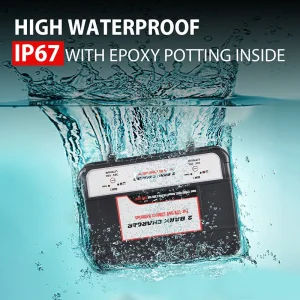
Harsh industrial environments expose components to conductive dust, high moisture, and extreme temperatures. Chargers must feature thermal throttling, over-voltage protection, and robust ingress protection ratings up to IP67.
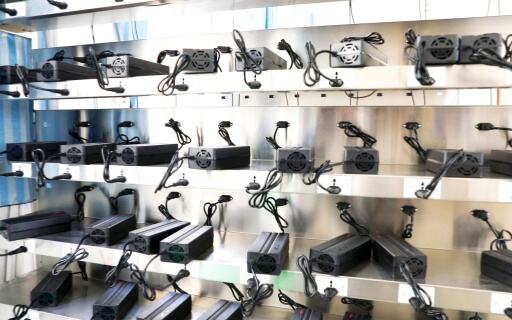
Featured Manufacturer: Guangdong Hyper Charger Co., Ltd.

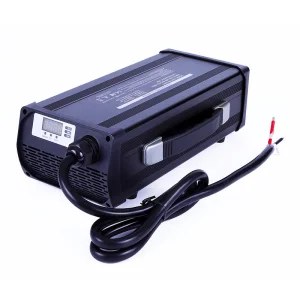
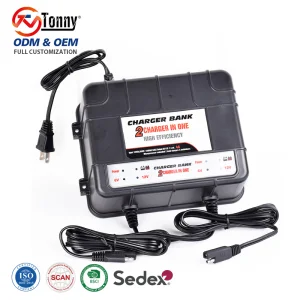
Established as a vanguard of innovative power electronics, Guangdong Hyper Charger Co., Ltd. possesses nearly 15 years of expert experience in R&D, precision manufacturing, and global commercial distribution of industrial battery chargers.
Operating a state-of-the-art facility spanning over 20,000 square meters, the company combines an experienced engineering R&D group with a highly skilled assembly workforce. Offering a massive portfolio of over 1,000 advanced charger models, they provide specialized solutions for lead-acid, gel, AGM, and high-energy lithium batteries.
Their systems are widely integrated into electric vehicles, golf carts, marine crafts, automated forklifts, logistics tow tractors, industrial cleaning machinery, and automated warehouse robotics. With automated PCB soldering and comprehensive three-stage testing, each product ensures exceptional thermal stability and long-term durability.
Guangdong Hyper Charger Manufacturing Facility
15+
Years Industry Experience
Power conversion innovation
20,000+
sqm Facility Area
Automated high-precision equipment
1,000+
Charger Models
Fully certified solutions
3/Batch
Strict Inspections
100% full-load aging tests

03. Top 10 AMR Battery Charger Manufacturers & Factories

Based on engineering capability, global delivery capacity, customization flexibility, and compliance certifications, we have compiled the definitive index of the world's leading AMR battery charger manufacturers.
01

Guangdong Hyper Charger Co., Ltd.

Top Recommendation - Customization & Scale

A leading OEM/ODM manufacturer in China, Guangdong Hyper Charger specializes in high-power industrial charging units. Their extensive catalog includes CE and UL-certified smart chargers equipped with advanced CAN-bus communication and temperature-controlled protection circuits, making them a preferred global sourcing partner for custom industrial machinery.

15 Years Expertise 20,000 sqm Factory 1000+ Models CAN/RS485 Bus Control
02

Wiferion (Puls Group)

Wireless Charging Specialist

An industry pioneer based in Germany (recently acquired by Puls), Wiferion is renowned for high-performance contactless inductive charging solutions. Their system is widely adopted in cleanroom AMRs and heavy manufacturing, where physical connectors are not viable.

Inductive Power Transfer Zero Maintenance IP65 Waterproof
03

Delta Electronics

Global Industrial Power Giant

Headquartered in Taiwan, Delta is a global leader in power supplies. Their MOOVair wireless charging systems and M3000 high-power chargers provide reliable power delivery for robotic fleets, AGVs, and industrial vehicles.

93%+ Efficiency Global Service Network CE/UL Certification
04

Conductix-Wampfler

Mobile Power Solutions Provider

A well-known global brand focusing on mobile energy supply. Conductix-Wampfler designs high-durability contact charging pads and inductive power supplies for factory floor automation systems, warehouses, and overhead cranes.

Contact Plate Design Heavy Industrial Grade Highly Reliable Components
05

Fronius International

Active Inverter Specialist

Austria-based Fronius manufactures high-efficiency Selectiva chargers utilizing their proprietary Active Inverter Technology. They deliver optimal charging curves for traction battery packs, reducing energy consumption and extending battery lifespan.

Active Inverter Tech Low Energy Waste Intelligent Charging Profile
06

Enatel Energy

Modular Rectifier Specialist

Based in New Zealand, Enatel designs modular rectifiers and smart chargers. Their modular system allows for flexible scalability; if one charger module encounters an error, the remaining modules continue to power the AMR fleet.

Modular Design High Redundancy Remote Network Analytics
07

Inventus Power

Integrated Battery & Charger Designer

An American manufacturer specializing in integrated battery pack and charger combinations. Inventus Power provides seamlessly matched battery-charger systems for critical medical, military, and autonomous robotics applications.

Matched System Design Medical Grade Standards Global Safety Auditing
08

CTEK

Smart Battery Care Pioneer

A Swedish brand known for high-quality smart chargers. CTEK provides highly reliable consumer and commercial-grade smart chargers, focusing on battery maintenance and state-of-health monitoring.

Patented Desulphation Auto Charging Curves High Reliability
09

Green Power Co., Ltd.

Asia-Pacific High Power Specialist

Based in South Korea, Green Power is a prominent provider of wireless and high-current fast-charging devices for automated materials handling equipment, serving major automotive and semiconductor assembly plants.

Semiconductor Integration High Precision Output Rugged Chassis Build
10

Powercon

High-Efficiency Power Conversion

A Danish engineering firm that specializes in grid-scale energy systems and heavy industrial power electronics. Powercon designs robust high-power charging platforms suited for heavy-duty container port AMRs and heavy autonomous agricultural vehicles.

High Voltage Systems Harsh Environment Design Smart Grid Integration

04. Industrial Sourcing Advantages of China's Electronics Clusters

Global logistics developers and robotic system integrators increasingly source industrial power conversion hardware from top-tier Chinese electronics clusters, particularly in Guangdong Province. The region's manufacturing advantage is built on several key factors:

Vertical Supply Chain Integration

Within the Pearl River Delta, component suppliers, high-frequency transformer factories, aluminum extrusion firms, and semiconductor packagers operate in close proximity. This localized network minimizes lead times and accelerates product prototyping.

Rigorous Testing & Quality Control

Advanced Chinese factories employ strict, multi-stage testing processes. For example, Guangdong Hyper Charger implements a 3-step testing protocol, including individual component incoming inspection, middle assembly functional testing, and a final full-load aging test.

Global Compliance Certification

Top factories obtain standard global safety marks, including CE, UL, RoHS, FCC, and KC, ensuring their chargers can be legally imported and safely operated in North America, the European Union, and the Asia-Pacific region.
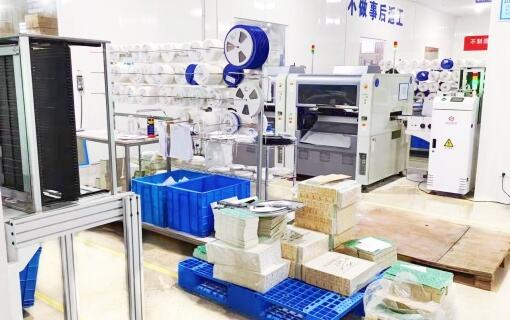
Automated PCB Soldering & Assembly Line

05. Localized Application Scenarios for High-Duty Chargers

Amortizing the cost of AMR robotic platforms requires tailoring the battery charging setup to the specific environmental challenges of the work site:
Application Scenario Operational Challenge Recommended Charger Tech Specs Key Performance Outcome
E-Commerce Warehousing 24/7 continuous operation, tight aisle constraints. Multi-channel fast charging, CAN-bus battery matching. Maximum uptime, fast battery top-offs during shift changes.
Cold Storage Logistics Sub-zero temperatures (-25°C), high condensation risks. IP67 waterproof rating, active thermal compensation. Condensation prevention, consistent charging speed in low temperatures.
Heavy Industrial (Automotive) Abrasive metal shavings, heavy vibrations. Rugged aluminum enclosures, potting protection, IP34+ rating. Resistance to short circuits caused by airborne metal dust.
Marine & Harbors High humidity, saltwater corrosion. Sealed marine-grade chassis, corrosion-resistant coatings. Protection against corrosion, reliable dockside charging.

06. Global Corporate Sourcing & Procurement Checklist

Procurement directors should use this checklist when evaluating proposals from industrial battery charger suppliers:
  • Energy Conversion Efficiency: Ensure a minimum of 92% efficiency at full rated load to minimize thermal losses and reduce operating costs.
  • Safety Certifications: Verify valid, independent laboratory test reports for CE, UL, FCC, and RoHS compliance.
  • BMS Integration & Telemetry: Check compatibility with your battery pack's communication protocol (CANopen, Modbus, or RS485).
  • Ingress Protection (IP Class): Choose the appropriate rating based on the environment: IP20 for clean, conditioned environments; IP34 for standard industrial settings; and IP65 to IP67 for dusty or wet environments.
  • Scalability & Warranty: Choose suppliers that offer multi-year warranties and local technical support to ensure long-term reliability.

07. Future Industry Trends

The industrial power charging sector is shifting toward greater autonomous efficiency, predictive maintenance, and higher power densities:
  • Gallium Nitride (GaN) and Silicon Carbide (SiC) Power Switches: Moving away from standard silicon MOSFETs toward GaN and SiC devices enables higher switching frequencies, smaller overall footprints, and conversion efficiencies exceeding 95%.
  • Integrated Fleet Charging Diagnostics: Next-generation chargers gather charge-cycle health telemetry, sending data back to central fleet software to predict and prevent battery failure before it causes a shutdown.
  • Universal Contact Standards: Standardizing mechanical contact charging pads across different robot brands simplifies warehouse charging layouts, allowing the same charging station to serve multiple AMR models.

08. Technical Q&A: Industrial AMR Charging Systems

Here are detailed technical answers to the most common questions regarding industrial AMR battery charging configurations:
What is the difference between contact charging and wireless inductive charging for AMRs?
Contact charging uses physical copper charging pads mounted on the floor or a wall that interface directly with plates on the robot. This method offers high efficiency (typically over 92%) and lower hardware costs. Wireless inductive charging uses an electromagnetic field to transfer energy without physical contact. This approach requires zero mechanical maintenance and prevents issues with contamination or physical wear, but it is less efficient (typically 80% to 88%) and has a higher initial system cost.
Why is CAN-bus communication critical for AMR charging systems?
Industrial lithium battery packs require constant monitoring during fast charging. Through CAN-bus communication (such as CANopen or J1939 protocols), the charger receives real-time telemetry from the robot's Battery Management System (BMS), including internal cell voltages, temperatures, and state of charge (SoC). This allows the charger to dynamically adjust its output current and voltage, preventing overcharging and thermal runaway.
Can a single industrial charger handle both Lead-Acid (AGM/Gel) and Lithium-Ion (LiFePO4) battery packs?
Yes, provided the charger features microchip control and programmable charging profiles. Chargers from manufacturers like Guangdong Hyper Charger can store multiple multi-stage charging algorithms in memory, allowing operators to switch between charging profiles via communication ports or physical toggle controls.
What ingress protection (IP) rating is recommended for industrial chargers?
For standard logistics environments, an IP20 to IP34 rating is typically sufficient. However, for harsh environments like cold storage (which is prone to high condensation), marine cargo facilities, or wood processing plants with high airborne dust, an IP65 to IP67 waterproof and dustproof rating is recommended to prevent short circuits and component failure.
How does opportunity charging benefit warehouse logistics?
Opportunity charging involves taking advantage of short idle periods (such as when a robot waits at an picking station or during employee shift changes) to top off the battery. Instead of scheduling long, centralized charging cycles or manually swapping out heavy battery packs, opportunity charging keeps the AMR fleet running continuously, reducing battery size requirements and maximizing throughput.