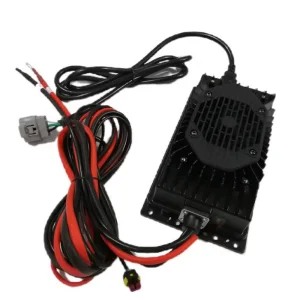
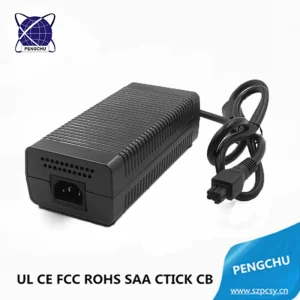
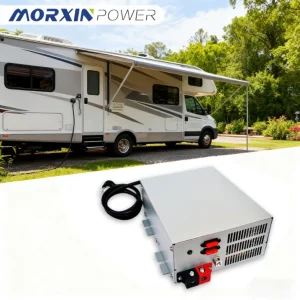
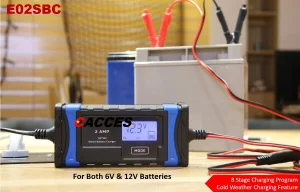
Explore our premium selection of advanced battery charging units engineered for heavy-duty automated guided vehicles (AGVs), service robots, marine powertrains, and electric material handling equipment.
How intelligent topology, high power density, and efficient conversion paradigms are redesigning modern global automated operations.
The global automation footprint is undergoing a profound structural shift. Autonomous Mobile Robots (AMRs), Automated Guided Vehicles (AGVs), and sophisticated robotic cleaning fleets are rapidly moving from peripheral support assets to mission-critical infrastructure in smart factories, cold-chain logistics hubs, and modern maritime applications. As these systems move toward round-the-clock operating models, traditional charging methods expose deep operational bottlenecks. Fleet operators no longer view chargers as simple accessories; they recognize them as core components of runtime optimization, overall battery lifecycle management, and total cost of ownership (TCO) mitigation strategies.
Modern industrial architectures require high-frequency switching power supplies capable of smart communication with onboard Battery Management Systems (BMS). Early linear and low-frequency charging solutions suffered from poor power factor optimization, heavy thermal overhead, and rigid charging curves that rapidly degraded early lithium configurations. Today's premium manufacturing landscape relies heavily on multi-stage intelligent charging matrices—such as 7-stage smart pulse modulation profiles—to continuously sense internal cell resistance, monitor voltage variations, and dynamically adjust current inputs. This level of control keeps thermal levels low, maximizes charging speeds, and prevents dangerous over-saturation across diverse energy storage systems.
When engineering procurement teams search for dependable industrial components, they require verified, field-tested technical data rather than generic marketing promises. In the high-stakes world of heavy industry and robotics integration, operational security requires real transparency into production metrics, high-precision electronic manufacturing infrastructure, and validated multi-stage quality control mechanisms. True expertise is demonstrated through robust compliance, clear documentation of automated workflows, and an unwavering commitment to strict international safety standards.
Furthermore, structural developments in fields like collaborative service robotics and automated logistics demand a high degree of interoperability. Modern charging systems must smoothly interface across a variety of cell formulations—including classic deep-cycle Valve-Regulated Lead-Acid (VRLA), Absorbent Glass Mat (AGM), advanced Gel cells, and ultra-high-density Lithium Iron Phosphate (LiFePO4) or Ternary Lithium packs. Finding a manufacturing partner with the specialized engineering capabilities to design across these different chemical platforms while managing variable line voltages worldwide is the foundation of building a reliable, globally competitive automation infrastructure.
A deep dive into our manufacturing infrastructure, continuous R&D investment, and rigorous industrial quality assurance protocols.
Guangdong Hyper Charger Co., Ltd. stands as a world-class professional manufacturer dedicated entirely to the long-term research, design, engineering, and large-scale manufacturing of high-performance industrial battery chargers. With nearly 15 years of industry-leading experience, the enterprise has carved out a global reputation for delivering exceptionally reliable, high-efficiency, and tech-forward charging solutions tailored specifically for highly regulated commercial, industrial, and automated tracking platforms across the globe.
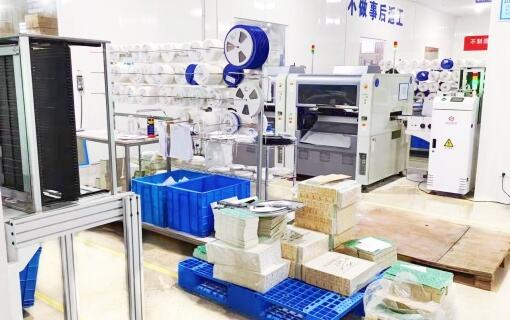
Operating a modernized, vertically integrated production facility that extends across more than 20,000 square meters, the company maintains the large-scale manufacturing capacity needed to effortlessly fulfill high-volume global OEM and ODM orders. This expansive production footprint is closely managed by an elite, multi-disciplinary R&D engineering team alongside a highly specialized technical workforce. Together, they maintain a highly diverse product portfolio containing over 1,000 active charger models designed to precisely meet the specific requirements of complex power networks worldwide.

Our expansive product lines provide comprehensive charging solutions for both lead-acid chemistries and advanced lithium configurations. Our systems are deployed across a wide range of industrial applications, including automotive assemblies, heavy duty transport, industrial material handling platforms, recreational vehicles (RVs), commercial golf fleets, professional cleaning systems, automated agricultural machinery, and specialized robotic docking stations.
At Guangdong Hyper Charger Co., Ltd., uncompromised quality control is the core philosophy guiding all manufacturing processes. We implement rigid, standardized workflows backed by a comprehensive quality assurance framework. Each individual product goes through three separate, intensive inspection stages during its manufacturing lifecycle. Furthermore, every production batch is subjected to continuous, fully logged thermal aging tests before final packaging. This rigorous testing approach ensures long-term operational stability, safety under extreme conditions, and consistent electrical performance across every single unit delivered to our clients.
Our advanced production lines are highly standardized and automated. From precision surface-mount technology (SMT) and PCB wave soldering to final chassis assembly and multi-point calibration, every stage is executed using high-precision automated machinery and premium electronic components. This disciplined engineering focus significantly increases raw production efficiency while ensuring perfect consistency and reliability across massive, multi-container product shipments.
An objective evaluation of the technical risks, component failures, and efficiency losses that procurement managers face when integrating automated charging infrastructure.
Generic chargers often use rigid, unoptimized charging currents that fail to adjust for temperature variations. This leads to severe plate sulfation in lead-acid packs and accelerated lithium plating in LiFePO4 cells, drastically reducing total asset lifecycles.
Low-grade components can lead to major thermal runaway events. Without integrated smart temperature compensation, chargers operating in enclosed warehouse environments or hot engine bays run the risk of catastrophic system fires or continuous component failures.
Cheap power units regularly introduce severe electromagnetic interference (EMI) back into the facility's local electrical grid. This disrupts sensitive radio frequencies, breaks automated sensor links, and corrupts nearby industrial PLC tracking signals.
Many factories only provide basic catalog configurations that cannot be customized. This forces design engineers to fundamentally rebuild their own chassis frames, custom input plugs, and digital communication links to fit into specialized robotic compartments.
Low-cost manufacturing operations often forge safety documentation. This creates significant corporate liability risks, leaves systems open to failing local customs clearance, and prevents deployment within strict safety-first manufacturing zones.
System-wide power deployments optimized for dynamic operational environments, multi-voltage fleets, and high-frequency production routines.
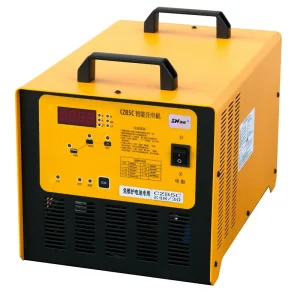
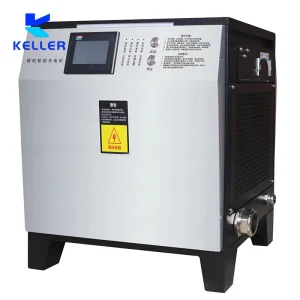
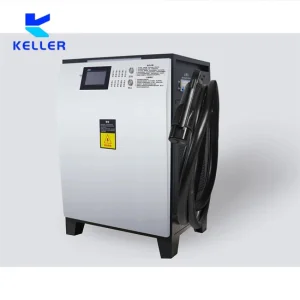
For heavy duty automation environments like container yards, automated building zones, and industrial forklift paths, our 80V series chargers (spanning 1.2kW up to 24kW outputs) offer the ideal infrastructure core. This layout easily achieves conversion efficiencies above 94%, significantly dropping power losses across high-volume production operations. Built-in CAN bus communications let the power supply constantly adjust charging currents based on real-time cell temperatures and voltage inputs from the vehicle's BMS, eliminating unsafe grid overloads and keeping automated heavy machinery running at peak performance.
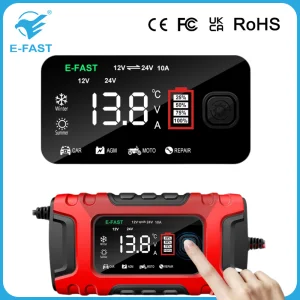
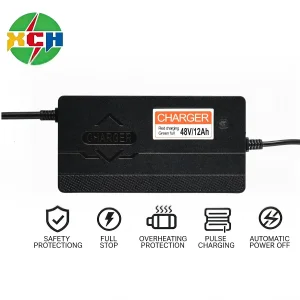
Commercial service robots and autonomous retail sweepers require regular opportunity charging cycles throughout the day. Our 7-stage automatic smart pulse charging technology systematically evaluates battery health by applying distinct diagnostic, desulfation, soft-start, bulk constant-current, absorption, parameter validation, and pulse maintenance stages. This completely hands-free method effectively treats passive crystallization layers within traditional lead-acid or gel matrices, stabilizing long-term energy density and protecting equipment fleets from unpredicted power loss during scheduled operations.
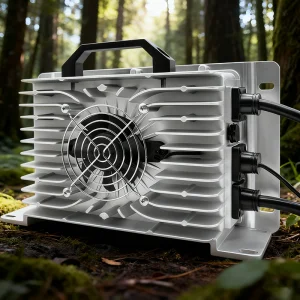
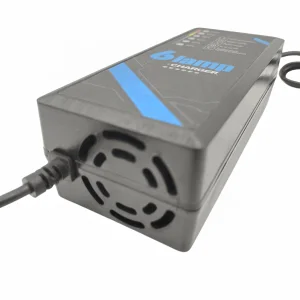
Industrial applications frequently expose charging systems to heavy airborne dust, fine water droplets, and corrosive cleaning chemicals. Our professional industrial 3300W IP34-rated line uses a sealed, impact-resistant enclosure paired with internally isolated cooling air channels. This specialized design keeps vital switching elements completely safe from external contamination. It provides a long-lasting, heavy-duty option for specialized sanitation sweepers, marine port vehicles, and outdoor transport fleets that operate in fluctuating humidity levels and challenging ambient temperatures.
Ensuring problem-free customs clearance, universal grid compatibility, and precise application matching through expert OEM/ODM engineering.
Navigating different regulatory and electrical standards across global industrial regions can be challenging for procurement teams. An industrial charger must adapt seamlessly to the target country's specific grid rules, line frequencies, and safety protocols. Guangdong Hyper Charger Co., Ltd. addresses these requirements by building wide line-voltage inputs into our primary architectures. This covers everything from three-phase, four-wire 220V/480V American standards down to regional single-phase European configurations. Every product series is engineered to absorb input voltage swings cleanly, protecting your automated systems from damage caused by unreliable local power lines.
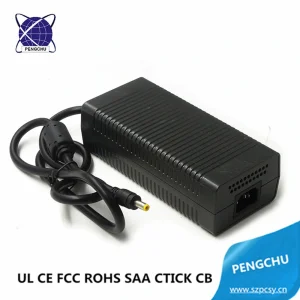
Our dedicated regulatory division ensures our products conform to strict international safety and environmental mandates. We maintain complete traceability and support compliance certifications including CE, FCC, RoHS, and specialized industrial standards. By sourcing from a certified manufacturer that uses authentic electronic components and verified production processes, international buyers avoid common compliance failures at customs, meet strict corporate safety guidelines, and confidently deploy automated solutions worldwide.
For custom integration needs, our robust OEM and ODM workflows provide flexible design options that match your exact engineering parameters. Whether you require specific housing dimensions to fit a compact robotic docking bay, custom digital communication messaging, or distinct aesthetic finishes, our engineering team can translate your specifications into production-ready blueprints. We provide detailed CAD layouts, prototype samples, and validation reports to ensure the custom product performs perfectly within your automated ecosystem.
A look ahead at the material innovations, intelligent network protocols, and high-frequency advancements shaping future energy solutions.
The future of robotic power delivery focuses on increasing power density, reducing thermal signatures, and enabling truly autonomous charging methods. Our R&D division is focused on incorporating Gallium Nitride (GaN) and Silicon Carbide (SiC) semiconductor technologies into our next-generation high-frequency charging platforms. These advanced materials feature significantly lower switching losses compared to traditional silicon components. This allows us to reduce charger sizes while increasing overall energy conversion efficiency past 96%, enabling more compact charging structures that fit easily into modern automated warehouse layouts.
At the same time, we are expanding our communication systems to enable predictive fleet management. By incorporating edge-computing modules directly onto our internal charger PCBs, our systems can monitor charging curves, track battery wear characteristics, and calculate remaining cell lifetimes in real-time. This diagnostic data can be shared directly with your facility's centralized cloud platform via Wi-Fi, Bluetooth, or cellular networks. It enables maintenance teams to identify failing battery cells before they cause unexpected downtime, ensuring your automated fleet continues running smoothly and efficiently.
Detailed, objective answers to complex technical questions commonly encountered by automation engineers and procurement managers.
Review our complete range of smart chargers, mobile power units, and automated switching systems designed for global distribution and integration.
 Hyper Charger