Engineered to support heavy industry, material handling, fleet vehicles, and marine systems in the coldest regions.
Charging industrial batteries in cold climates presents unique electrochemical challenges. When ambient temperatures drop below 0°C (32°F), the chemical kinetics within lithium-ion and lead-acid structures slow down exponentially. According to the Arrhenius equation, the rate of ion diffusion decreases, causing a surge in internal resistance.
At sub-zero temperatures, charging lithium-ion batteries under conventional currents causes lithium ions to pile up at the anode surface rather than inserting themselves into the graphite layers. This leads to lithium plating, which creates conductive pathways or dendrites. These structures degrade capacity and threaten to short-circuit the cell structure. Advanced chargers must decrease charging currents to mitigate plating risk while dynamically managing thermal feedback loops.
Lead-acid batteries require a higher charge voltage at low temperatures to overcome increased internal resistance. Without automatic temperature compensation, chargers will consistently undercharge lead-acid cells in winter, accelerating plate sulfation and cell failure. Our smart microcontrollers actively adjust terminal voltage by -3mV/°C/Cell to -5mV/°C/Cell based on real-time probe measurements.
For high-capacity lithium fleets operating in cold storage or extreme latitudes, the most effective technique is a pre-charging thermal stage. Using a low safe pulse current or integrated heater power control, the charger gently raises the internal cell temperature to a safe threshold above 0°C before applying the high-current bulk phase, ensuring maximum longevity and minimal structural wear.
Guangdong Hyper Charger Co., Ltd. is a professional manufacturer specializing in the research, development, and production of battery chargers. With nearly 15 years of industry experience, we have established a strong reputation for delivering reliable, efficient, and innovative charging solutions to customers worldwide.
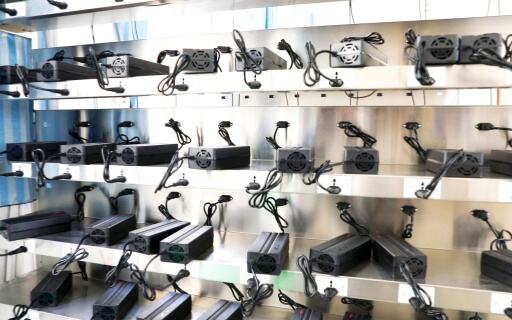
Our company operates a modern production facility covering more than 20,000 square meters, supported by an experienced R&D team and a skilled technical workforce. We offer a diverse portfolio of over 1,000 charger models, designed to meet a wide range of applications. We provide comprehensive charging solutions for both lead-acid batteries and lithium batteries. Our products are widely used in automotive, motorcycles, recreational vehicles (RVs), golf carts, forklifts, cleaning equipment, agricultural machinery, and various industrial tools.
Tailored charging paradigms designed to optimize performance in demanding logistics, marine, and industrial contexts.
Our smart chargers operate utilizing customizable multi-stage charge profiles. This process includes a Soft Start Phase to analyze cell health, a Bulk Constant Current (CC) Phase for speed, an Absorption Constant Voltage (CV) Phase to safely maximize capacity, and a Float Phase for maintenance. For lead-acid configurations, a periodic Equalization / Desulfation Phase high-voltage pulse profile is incorporated to reverse lead sulfate crystal accumulation on the plates.
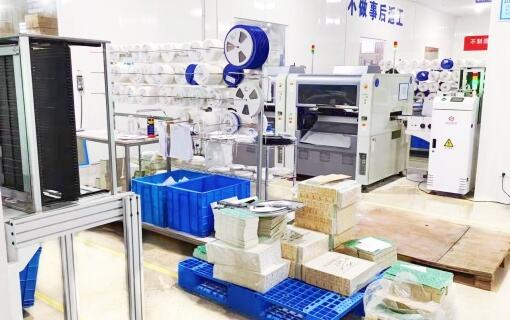
At Guangdong Hyper Charger Co., Ltd., quality is at the core of everything we do. We implement strict production processes along with a comprehensive quality control system. Each product undergoes three rigorous inspection procedures during manufacturing, and every batch is subjected to 100% full-load aging tests before shipment. This ensures long-term stability, safety, and consistent performance, guaranteeing that all delivered products meet high-quality standards.
Our production process is highly standardized and automated. From PCB soldering to final assembly, all stages are completed using advanced high-precision equipment and premium electronic components. This not only improves production efficiency but also ensures consistency and reliability across large-volume orders.
Equipped with multiple high-precision devices, our dedicated R&D and production teams continuously innovate and optimize our products. This enables us to quickly respond to market demands and deliver efficient, reliable, and customized charging solutions.
Navigating global electrical safety regulations is crucial for international enterprise procurement. Our regulatory compliance engineering team ensures that every charger shipped meets the destination country's safety, electromagnetism, and environmental requirements.
Our industrial and consumer chargers are fully certified under the European Union CE marking, complying with the low voltage directive (LVD) and electromagnetic compatibility (EMC) regulations, mitigating noise issues with nearby electronics.
We provide comprehensive OEM and ODM support. From custom enclosure shapes, custom battery curve configurations, custom communication protocols (CAN-bus, Modbus), to branding and packaging designed for local markets.
Our factory processes prioritize ecological safety. All electronic components, solder pastes, and physical frame materials are strictly RoHS compliant, preventing hazardous lead and cadmium pollution.
The transition toward high-efficiency industrial electrification requires continuous innovation in charger design. The Guangdong Hyper Charger R&D center is currently working on several key technological tracks to define the next generation of cold weather power delivery:
Transitioning from silicon MOSFETs to Gallium Nitride power transistors enables higher switching frequencies. This translates to smaller magnetic components, reducing the footprint of high-capacity smart chargers by up to 40% while raising efficiency beyond 96%. This reduction in wasted heat is critical for enclosed, sealed low-temperature devices operating in sub-zero environments.
Future iterations of our cold-weather industrial battery chargers will incorporate integrated Wi-Fi and Cellular IoT nodes. This enables operators to remotely monitor charging curves, track ambient battery temperatures, detect cell failures, and deploy firmware updates with updated charging parameters to protect battery health in response to unpredictable seasonal shifts.
Implementing next-generation communication protocols allows our chargers to poll a battery's BMS (Battery Management System) and automatically calibrate profiles for mixed-fleet environments. The same unit can charge a 48V Lithium-ion forklift, a 48V Lead Acid utility cart, or a high-capacity backup array, adapting its current output and temperature compensation curve to match the specific chemistry detected.
Key technical queries resolved by our senior application engineering and design division.
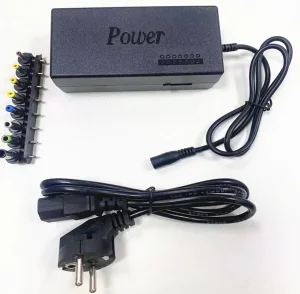
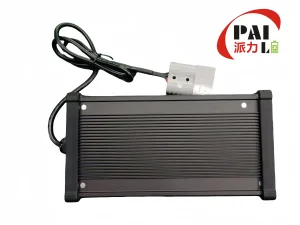
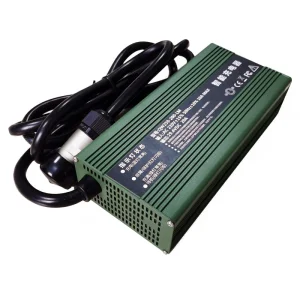
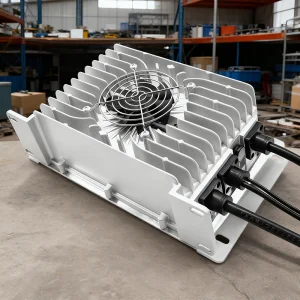
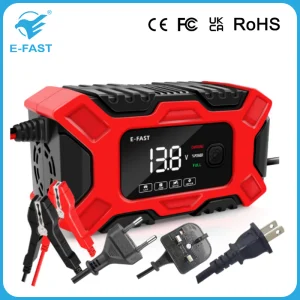
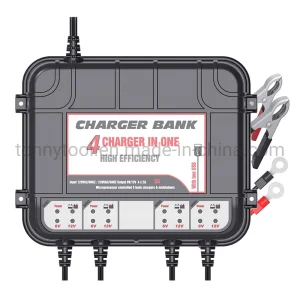
From lightweight consumer trickle chargers to high-power industrial telecom and forklift energy stations.
 Hyper Charger