Analyzing the vital role of Absorbent Glass Mat (AGM) chemistry in modern motive, standby, and grid-tied energy systems.
Unlike traditional flooded lead-acid systems, AGM batteries utilize a fiberglass mat separator to absorb electrolytes. This spill-proof configuration ensures optimal gas recombination efficiency exceeding 99%, making them the definitive standard for safety-critical installations like telecom centers and data UPS facilities.
The low internal resistance of high-grade AGM batteries permits rapid energy delivery and acceptance. They operate reliably in sub-zero climates and exhibit strong vibration resistance, which is why start-stop micro-hybrids and heavy-duty material handling machinery consistently rely on them.
AGM batteries achieve a recycling circularity rate exceeding 99% globally, outperforming many lithium counterparts. From a lifecycle assessment standpoint, AGM remains highly sustainable, provided they are managed by intelligent charging systems that prevent premature plate degradation.
While AGM technology provides robust mechanical construction and maintenance-free operations, it is highly sensitive to charge parameters. Inadequate control over charging profiles is the primary cause of early capacity fade. Specifically, chronic undercharging results in irreversible sulfation, whereas overcharging initiates electrolyte dry-out and thermal runaway.
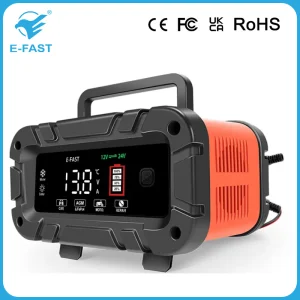
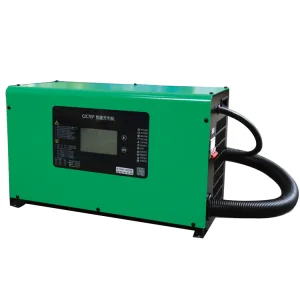
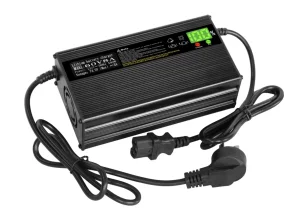
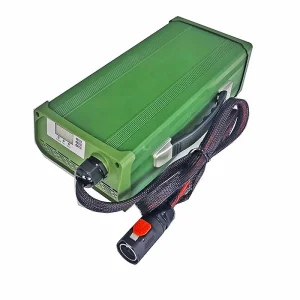
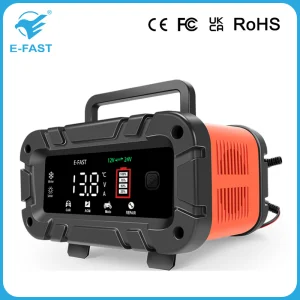
To preserve the investments made in high-end battery packs, system designers must deploy intelligent chargers that utilize closed-loop feedback, temperature compensation, and tailored multi-stage curves (Bulk, Absorption, Float).
Guangdong Hyper Charger Co., Ltd. addresses this design challenge by engineering smart chargers that adjust parameters dynamically. This keeps the battery within safe electrochemical boundaries, extending service life by up to 30%.
A global index of leading AGM developers based on manufacturing footprint, technology innovation, and quality control.
Clarios produces a significant portion of the world's automotive AGM batteries, powering millions of start-stop vehicles worldwide. Their proprietary grid technologies (PowerFrame®) ensure superior starting power, fast recharge capability, and excellent corrosion resistance. Their manufacturing processes set global standards for closed-loop battery recycling.
Renowned for engineering precision, GS Yuasa manufactures highly reliable AGM batteries for automotive, motorcycle, and industrial applications. Their industrial AGM lines feature thicker lead plates and high-density active material, providing dependable backup power for telecommunications, utility switchgear, and emergency lighting systems.
EnerSys is a pioneer in Thin Plate Pure Lead (TPPL) technology, a specialized variant of AGM. By using high-purity lead plates that are thinner than conventional grids, EnerSys batteries provide exceptional power density and longer storage shelf lives. Their products are widely utilized in heavy-duty military vehicles, aerospace systems, and high-rate UPS configurations.
East Penn operates one of the world's largest single-site battery manufacturing facilities in Pennsylvania, USA. Their Deka AGM series is highly regarded for its robust plate construction and tight pack compression. This design offers excellent resistance to vibration and thermal-induced degradation, making them popular in marine, RV, and solar off-grid applications.
Exide is a pioneer in carbon-additives for AGM negative plates (LifeGrid™ technology). This innovation enhances charge acceptance and mitigates plate sulfation in partial state-of-charge (PSoC) operations. Their factories across Europe supply major automotive OEMs with high-durability AGM batteries tailored for intelligent fuel-saving systems.
Leoch operates multiple automated factories globally, producing a comprehensive line of AGM battery models. Their products range from small-capacity UPS batteries to large 2V front-terminal telecom cells. Their competitive pricing, combined with international quality certifications, makes them a major supplier for global infrastructure projects.
Austria-based Banner Batteries supplies premium starting AGM units under the Running Bull brand to top-tier European vehicle brands. Their factories utilize advanced automated assembly lines, ensuring uniform plate compression and high acid-retention capacity within the glass mat separators, resulting in cold-cranking reliability.
FIAMM specializes in high-integrity reserve power solutions. Their AGM cells are engineered to provide maximum energy security for industrial facilities, safety lighting, and rail infrastructure. FIAMM designs batteries with flame-retardant ABS plastics and advanced pressure relief valves to ensure safe operation in enclosed environments.
Camel Group is a major automotive battery manufacturer in the Asia-Pacific region, supplying OEMs and aftermarket buyers. Their highly automated factories produce AGM batteries with advanced plate alloy formulations. These designs maintain structural integrity under cycling conditions, providing reliable support for automotive electrical networks.
Narada has integrated advanced carbon additives into AGM chemistry, significantly improving charge acceptance and cycle life under partial state-of-charge (PSoC) conditions. Their high-capacity front-terminal AGM batteries are widely deployed in modern telecom base stations and utility-scale energy storage projects globally.
To maximize the efficiency of advanced AGM plates, matching charging technology is essential. High-performance batteries require smart charging networks.
AGM battery chemistry is highly sensitive to ambient temperature changes. High-end chargers must use real-time temperature compensation to adjust charging voltages, preventing thermal runaway in hot climates and undercharging in cold conditions.
Advanced chargers transition through constant-current bulk charging, constant-voltage absorption, and dynamic float maintenance. This approach prevents plate grid erosion and ensures complete gas recombination.
Accumulated lead sulfate crystals reduce active plate surface area. Intelligent pulse charger designs include automatic desulfation cycles that use high-frequency current pulses to break down these deposits and restore capacity.
Modern industrial systems integrate protection features like reverse polarity detection, short circuit prevention, and high-temperature cutoff. These measures protect the battery, charger, and operator from hazard events.
A professional manufacturer specializing in the research, development, and production of advanced battery chargers.
Guangdong Hyper Charger Co., Ltd. is a professional manufacturer specializing in the research, development, and production of battery chargers. With nearly 15 years of industry experience, we have established a strong reputation for delivering reliable, efficient, and innovative charging solutions to customers worldwide.
Our company operates a modern production facility covering more than 20,000 square meters, supported by an experienced R&D team and a skilled technical workforce. We offer a diverse portfolio of over 1,000 charger models, designed to meet a wide range of applications.
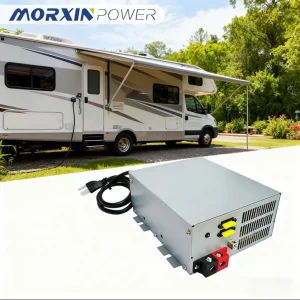
We provide comprehensive charging solutions for both lead-acid batteries and lithium batteries. Our products are widely used in automotive, motorcycles, recreational vehicles (RVs), golf carts, forklifts, cleaning equipment, agricultural machinery, and various industrial tools.
At Guangdong Hyper Charger Co., Ltd., quality is at the core of everything we do. We implement strict production processes along with a comprehensive quality control system. Each product undergoes three rigorous inspection procedures during manufacturing, and every batch is subjected to aging tests before shipment. This ensures long-term stability, safety, and consistent performance, guaranteeing that all delivered products meet high-quality standards.
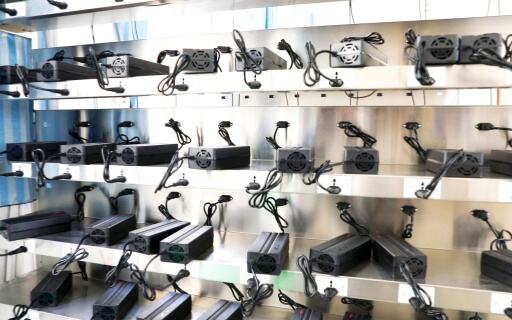
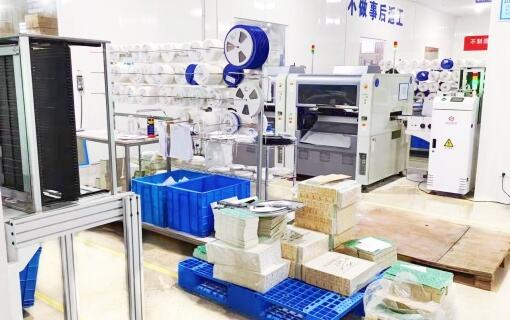
Our production process is highly standardized and automated. From PCB soldering to final assembly, all stages are completed using advanced high-precision equipment and premium electronic components. This not only improves production efficiency but also ensures consistency and reliability across large-volume orders.
We pride ourselves on our strong technical expertise and professionalism. Equipped with multiple high-precision devices, our dedicated R&D and production teams continuously innovate and optimize our products. This enables us to quickly respond to market demands and deliver efficient, reliable, and customized charging solutions.
Beyond our standard product range, we offer flexible OEM and ODM customization services. Whether you require specific product designs, customized appearances, or tailored technical parameters, we can develop solutions based on your exact requirements.
We continuously invest in advanced technology, process optimization, and talent development to stay at the forefront of the industry. If you are looking for a reliable charger manufacturer or have specific customization needs, Guangdong Hyper Charger Co., Ltd. is your trusted partner. We look forward to building long-term cooperation and providing you with high-quality, customized charging solutions.
Expert answers to critical technical questions regarding AGM battery characteristics and charging management.
AGM batteries utilize a recombinant gas design that recombines oxygen and hydrogen back into water inside the cell. If charged with a standard flooded battery profile, higher voltages can cause venting of gases through the safety valve. Because water cannot be replaced in a sealed AGM container, this venting leads to permanent dry-out and early capacity loss. Dedicated AGM profiles limit absorption voltages to safe thresholds, typically between 14.4V and 14.8V at 25°C.
Electrochemical reaction speeds increase as temperatures rise. If charging voltage remains constant at higher temperatures, the charge current increases, potentially leading to overcharging and thermal runaway. Conversely, at low temperatures, the battery may undercharge. A temperature-compensated charger automatically adjusts the voltage by approximately -3mV to -5mV per cell per °C deviation from 25°C, maintaining safe charge rates across seasonal changes.
Yes, often they can, provided the cell has not dried out or suffered internal plate shorts. Specialized chargers with a desulfation cycle apply controlled high-voltage pulses at low current. This breaks down lead sulfate crystals on the plates and returns the active material to the electrolyte, restoring battery capacity and performance.
Smart high-frequency (HF) chargers convert incoming AC power to high-frequency DC using advanced power semiconductor switches (MOSFETs/IGBTs). This approach allows for compact transformer designs, yielding efficiencies exceeding 90%. Microprocessor control enables precise multi-stage charging curves and adaptive profiling based on real-time feedback, outperforming traditional linear heavy-transformer chargers.
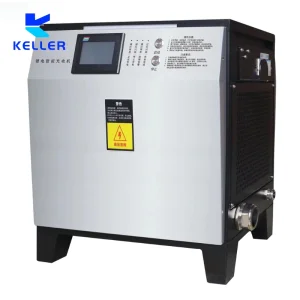
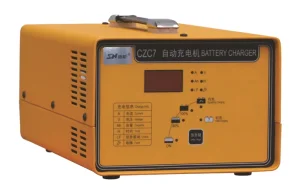
 Hyper Charger