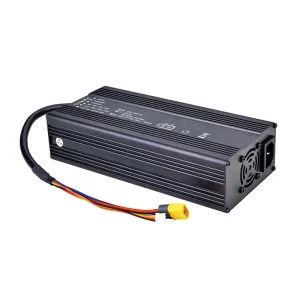
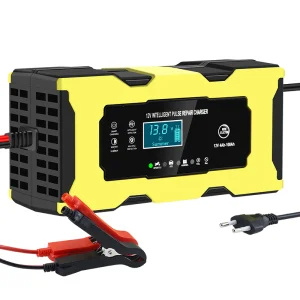
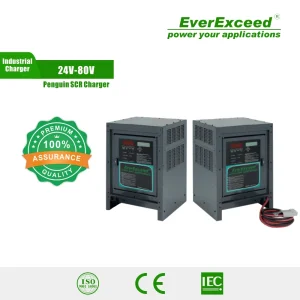
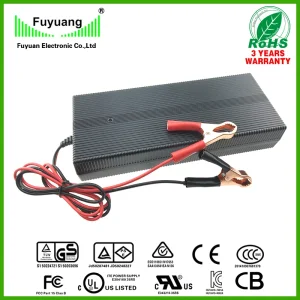
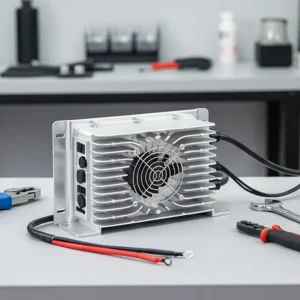
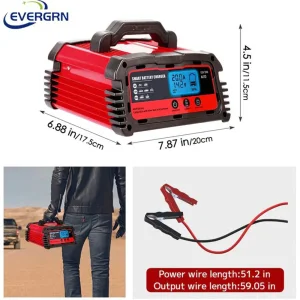
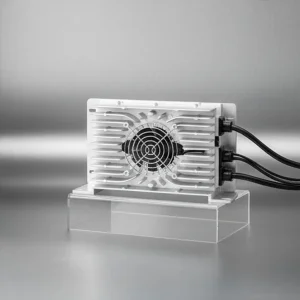
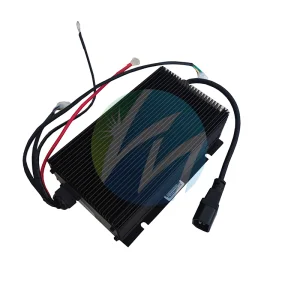
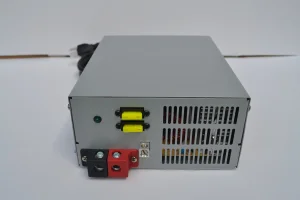
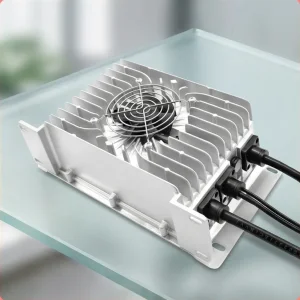
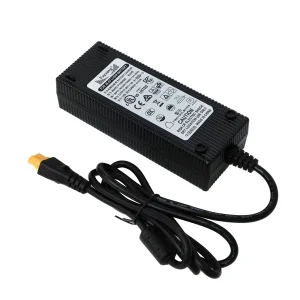
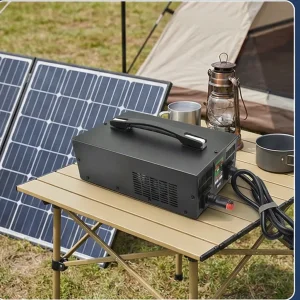
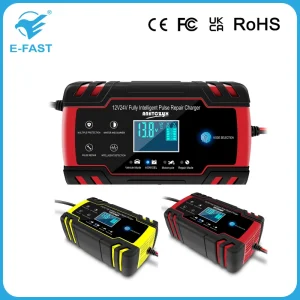
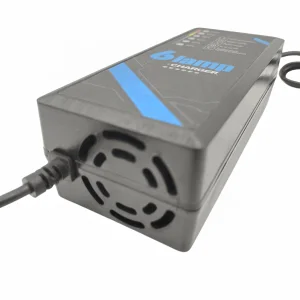
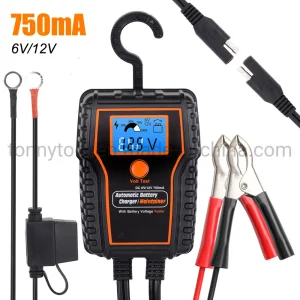
High-efficiency power modules for AGVs, Forklifts, and Autonomous Mobile Robots (AMR).
In the era of Industry 4.0, Automated Guided Vehicles (AGVs) and Autonomous Mobile Robots (AMRs) have become the heartbeat of modern logistics. As global e-commerce grows, the demand for 24/7 warehouse operations has surged, placing the spotlight on the most critical component of robotic reliability: The AGV Charger.
Currently, the market is shifting from traditional "plug-and-wait" charging to intelligent, rapid-charging ecosystems. Factories across North America, Europe, and Asia are integrating automated docking stations that utilize CANBus communication to synchronize battery health data with centralized fleet management systems.
Annual Growth Rate (CAGR) of AGV Charger Market
Average efficiency of modern GaN-based industrial chargers
Analyzing the technological shifts driving efficiency in autonomous logistics.
Eliminating physical wear and tear on contacts, wireless charging is becoming the standard for sterile environments and high-cycle operations.
Instead of long downtime, AGVs charge in short bursts (5-10 mins) during idle periods, maximizing fleet uptime.
Modern chargers act as data hubs, monitoring battery temperature, cycle counts, and predictive maintenance alerts via Cloud API.
Machine learning algorithms adjust charging curves in real-time based on battery chemistry aging to extend lifespan by up to 30%.
From Silicon to Gallium Nitride (GaN) and beyond.
Transitioning from bulky transformers to high-frequency switching power supplies (SMPS) achieving 94% efficiency.
Universal charging stations capable of auto-detecting battery voltage (24V/48V/80V) and communication protocols (CANOpen, Modbus).
V2G (Vehicle-to-Grid) integration where AGV fleets act as energy storage to balance warehouse peak-load electricity demands.
Chargers equipped with desulfation and cell-balancing pulses to "repair" degraded batteries during the charging cycle.

Guangdong Hyper Charger Co., Ltd. is a professional manufacturer specializing in the research, development, and production of battery chargers. With nearly 15 years of industry experience, we have established a strong reputation for delivering reliable, efficient, and innovative charging solutions to customers worldwide.
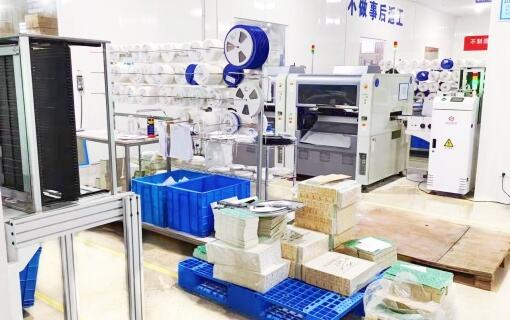
Our company operates a modern production facility covering more than 20,000 square meters, supported by an experienced R&D team and a skilled technical workforce. We offer a diverse portfolio of over 1,000 charger models, designed to meet a wide range of applications.
We provide comprehensive charging solutions for both lead-acid batteries and lithium batteries. Our products are widely used in automotive, motorcycles, recreational vehicles (RVs), golf carts, forklifts, cleaning equipment, agricultural machinery, and various industrial tools.
At Guangdong Hyper Charger Co., Ltd., quality is at the core of everything we do. Each product undergoes three rigorous inspection procedures during manufacturing, and every batch is subjected to aging tests before shipment. This ensures long-term stability, safety, and consistent performance.
Customized charging deployment for diverse industrial environments.
Specially designed chargers with internal heating elements to prevent condensation and ensure stable current flow in -30°C environments.
High-current (100A+) chargers for heavy AGVs transporting automotive chassis or steel coils, featuring IP67 protection against metal dust.
Fanless cooling designs for semiconductor and pharmaceutical labs to prevent air turbulence and particle contamination.
Expert insights into AGV charging system maintenance and selection.
Industrial-grade chargers for every mobile power requirement.
 Hyper Charger